Wet polishing
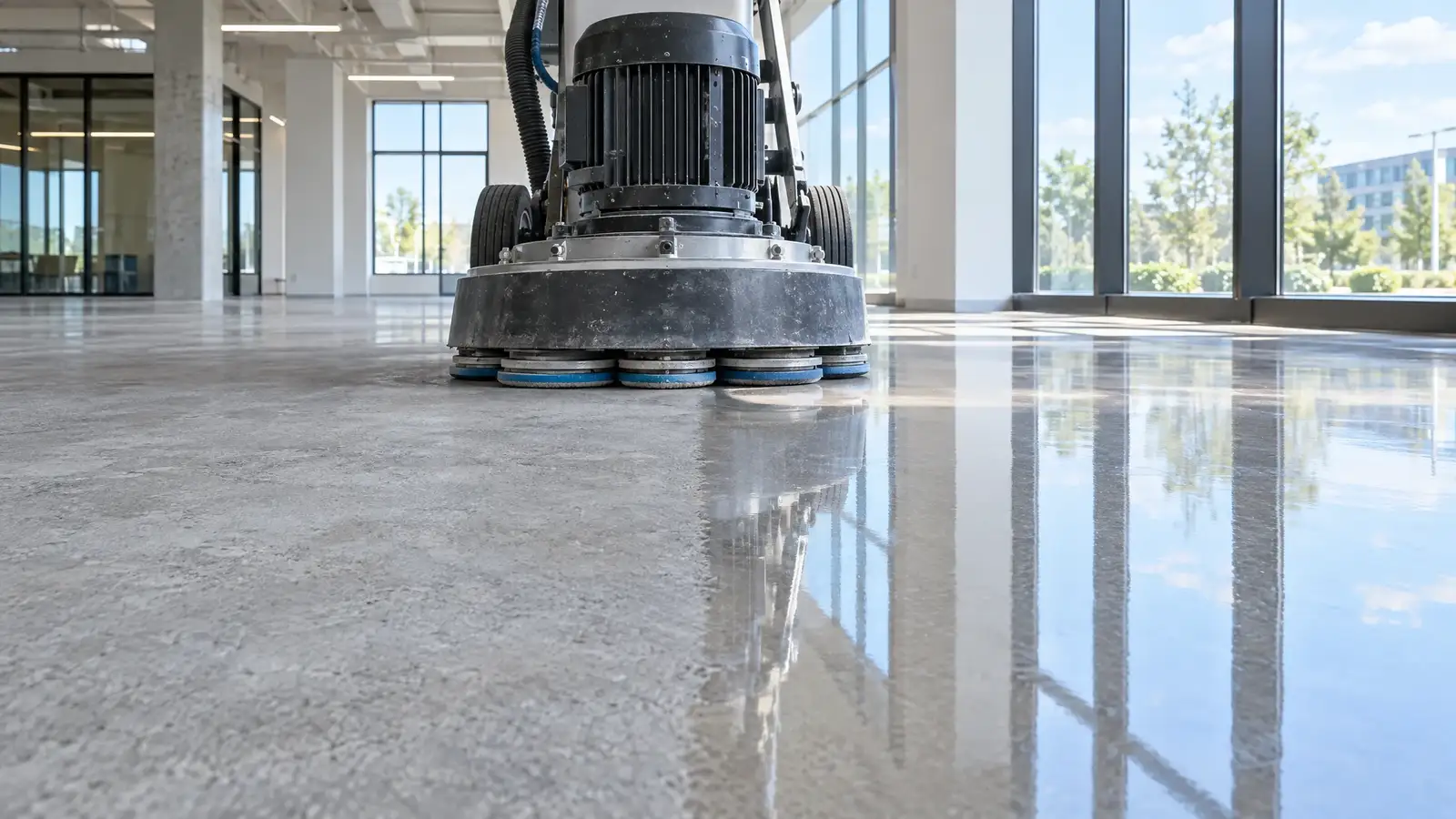
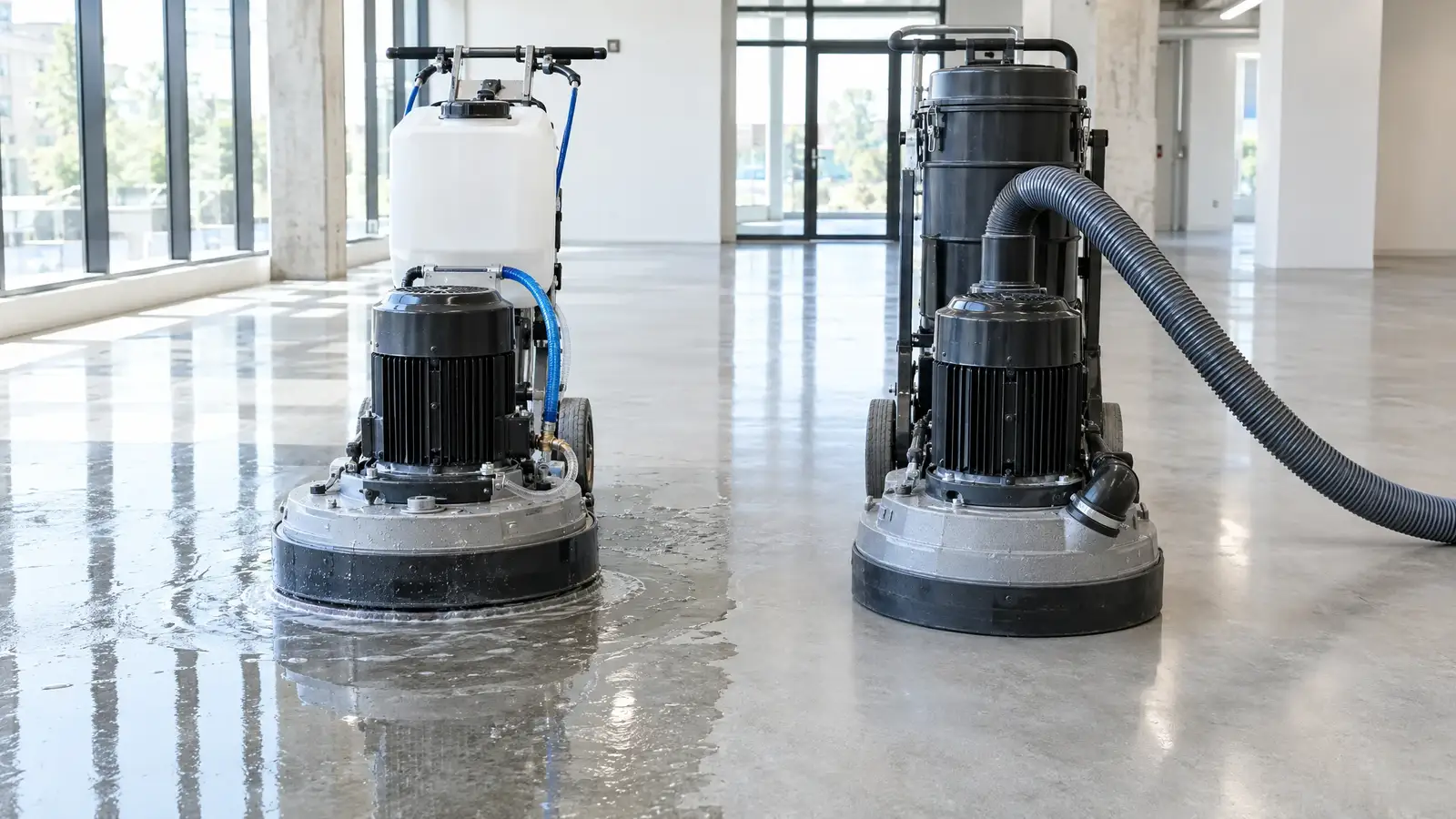
Water cools the diamonds and flushes away fines, producing slurry. It can give a clean cut and a good finish but needs slurry collection and disposal.
Dry polishing
Dry polishing uses dust extraction instead of water. It leaves no slurry and is common in occupied buildings, with HEPA extraction to control silica dust.
Which to choose
Many contractors use dry for most work and wet where conditions call for it. The final result can be excellent either way when done well.
Dust and safety
Whichever method is used, control of silica dust is essential. Ask your contractor how they manage it.
How the choice is made
Dry polishing relies on powerful dust extraction. Wet polishing uses water to carry away dust and cool the tools. Many projects use a mix, with dry for the heavy cutting and wet for fine steps or for sensitive areas.
Slurry and cleanup
Wet work produces slurry that has to be collected carefully. Dry work produces fine dust that must be captured at the machine. Either way, good housekeeping keeps neighboring rooms clean.
Occupied buildings
If the building stays open, dust control, sealed doorways and after-hours work matter more than the method itself. We plan the approach around your operations.
Quick answers
Is dry polishing messy?
With good extraction it is quite clean.
Is wet polishing better?
Not necessarily. It depends on the site and the process.