Concrete Floor Polishing in Florida
Diamond-ground, densified and polished in steps until the slab you already have shines like glass.
- Polishing
- Florida
- Free estimate
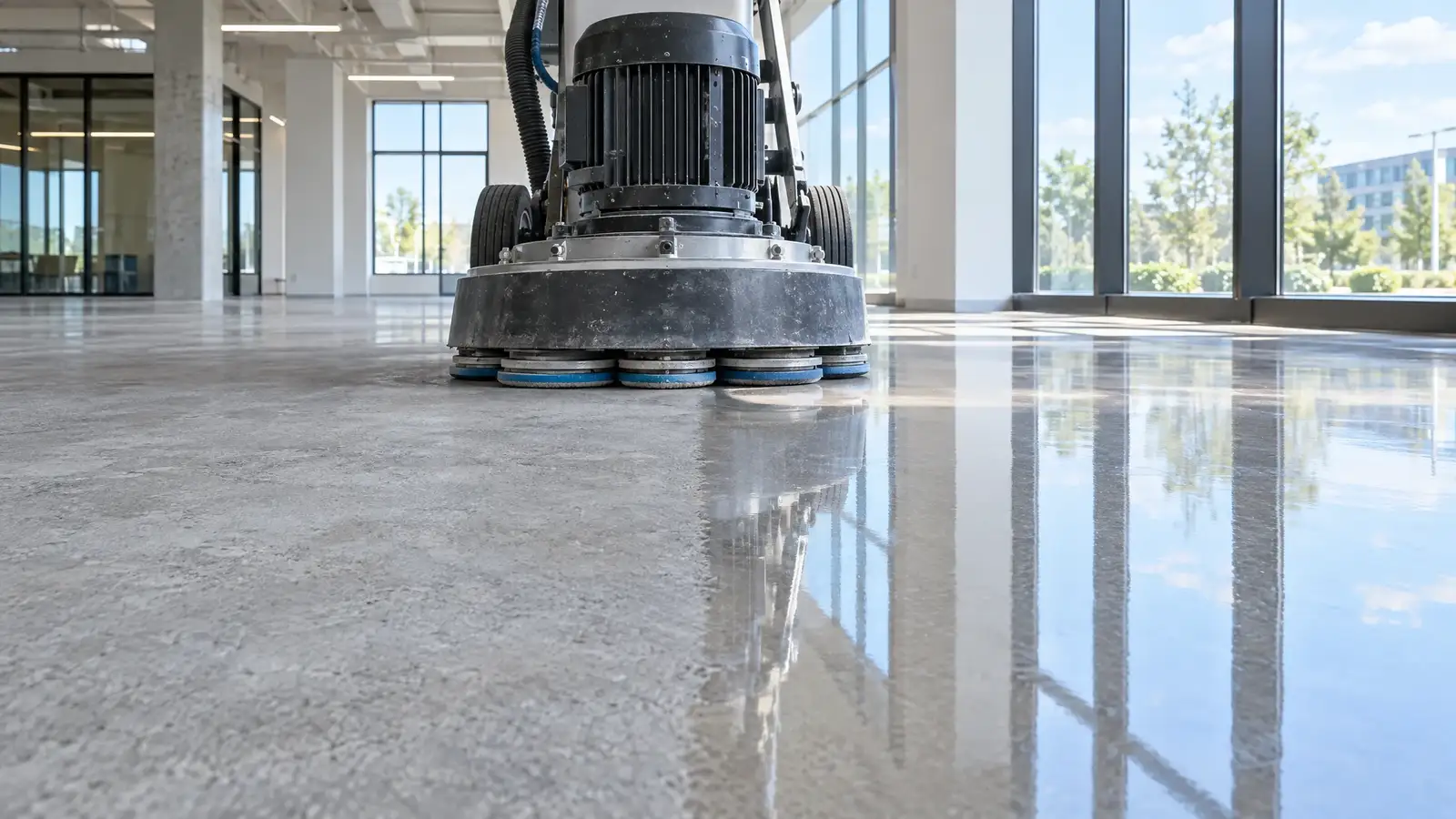
Polishing turns an ordinary slab into one of the toughest, easiest-care floors you can own. Diamond abrasives grind the surface flat, a chemical densifier hardens it, and finer and finer diamond pads bring up the shine, one grit at a time.
Because it works on the concrete you already have, there is no new material to wear out, peel or lift. The floor can run from a soft satin to a mirror finish, in cream, salt-and-pepper or full-aggregate looks, and it is the same system whether the building is a warehouse, a showroom or a home.
What happens on the floor
A crew grinds with coarse metal-bond diamonds to open the surface and remove coatings and stains. Joints and cracks are filled, the slab is densified, and then resin-bond diamonds step up through the grits. A guard or stain protector is applied at the end and the floor is burnished.
The number of steps and the final grit set the look. A lower finish is satin and quiet; a higher one reflects lights, windows and walls like water.
Why it suits Florida buildings
Slabs on grade dominate Florida construction, so there is almost always a concrete floor to work with. A sealed, polished slab does not trap moisture the way carpet or wood can, shrugs off mop water, and stays cooler underfoot than many coverings.
We check slab moisture before we start, because that matters in a humid state.
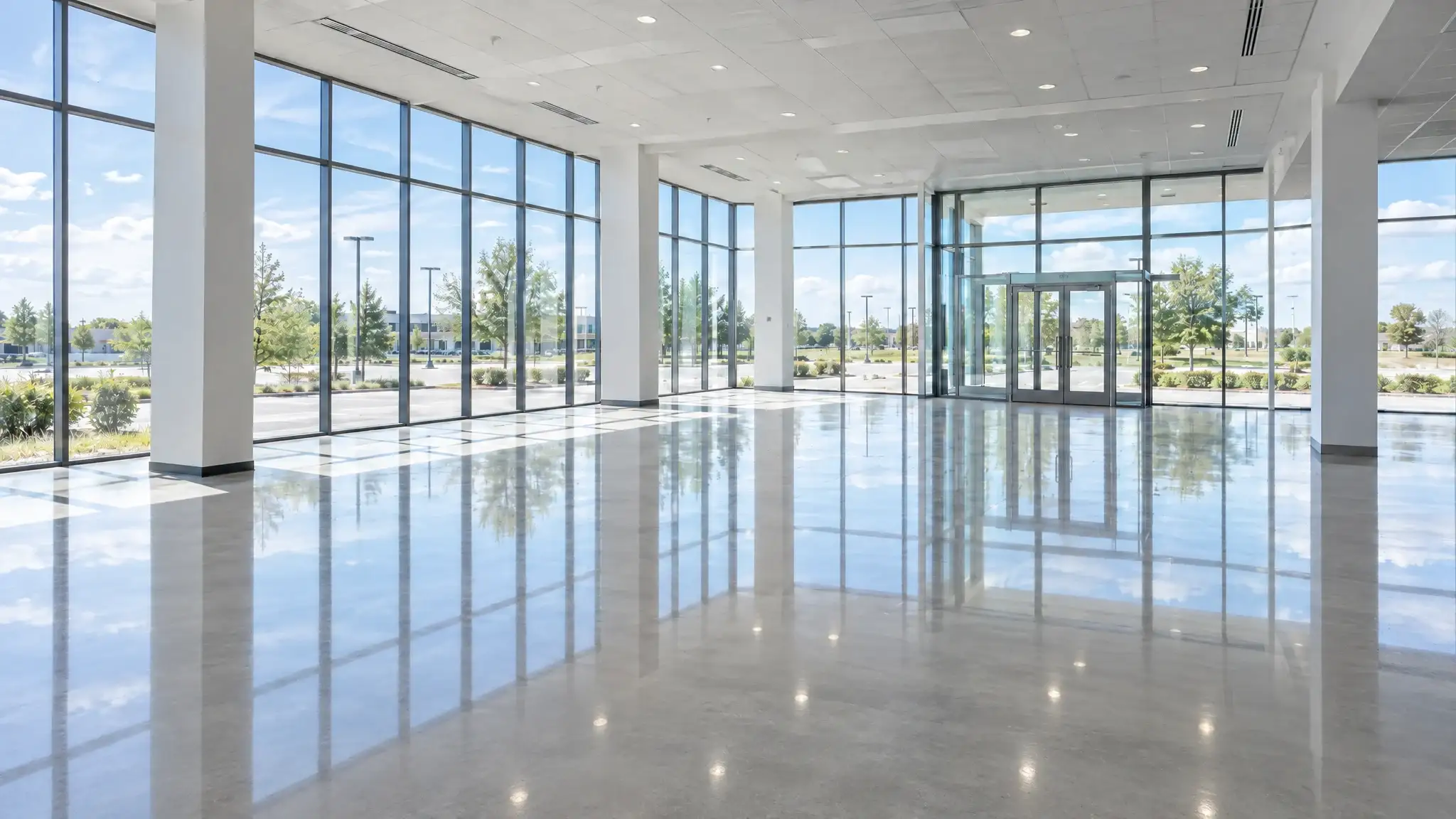
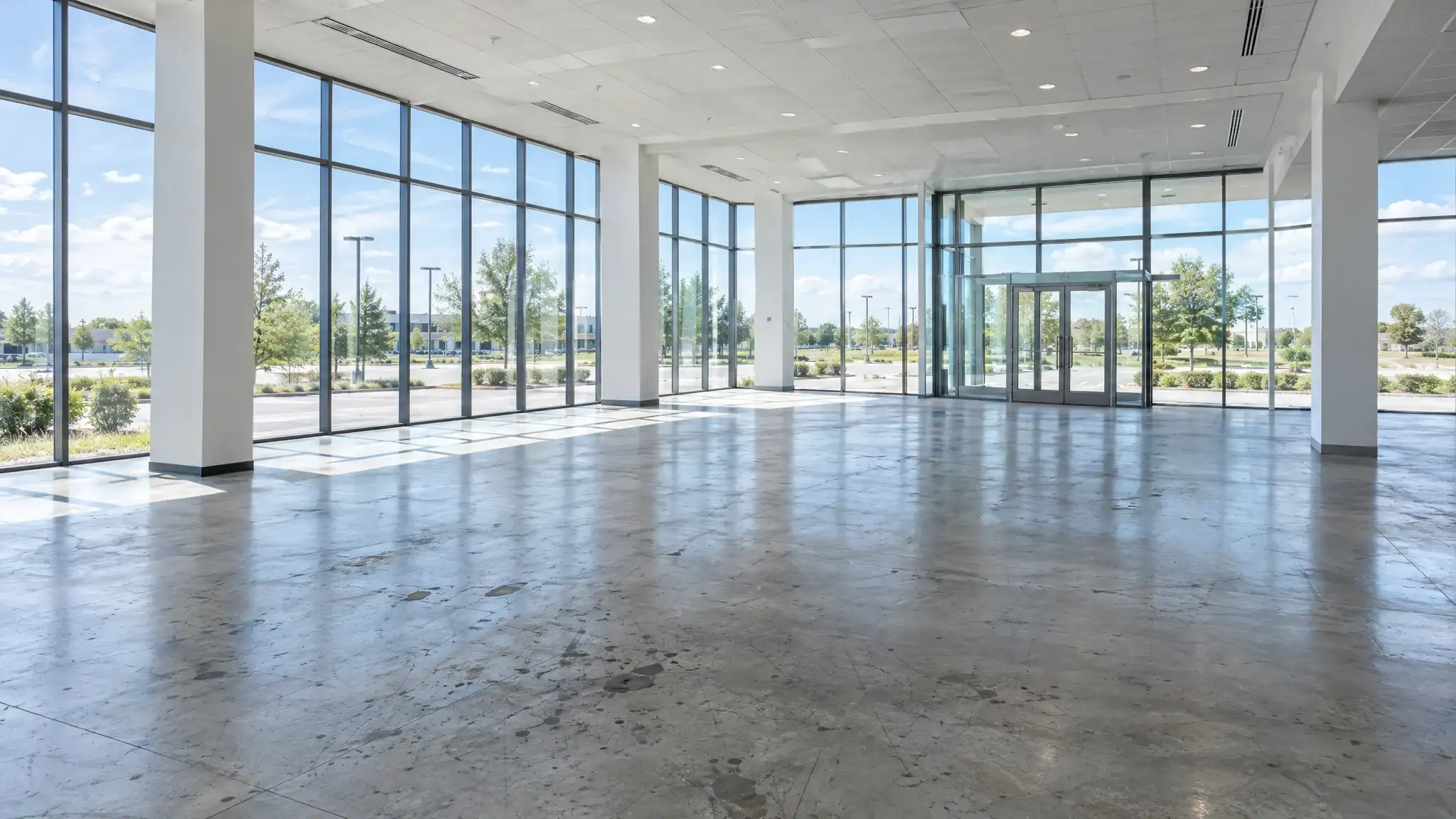
Raw slab to polished floor.
From first call to finished floor.
The steps for concrete floor polishing, in the order they happen.
- 01
Walk the floor
We look at the slab, test hardness and moisture and talk through the look you want.
- 02
Grind and repair
Coarse diamonds prepare the surface, then cracks and joints are filled.
- 03
Densify and polish
The slab is hardened and polished up through the grits.
- 04
Protect and burnish
A guard is applied and the floor is burnished to its final sheen.
Is it right for your floor?
A good fit when
- You have an existing slab in sound condition
- You want a durable floor with very low upkeep
- You like a clean, modern, reflective look
- You want to avoid recurring coatings and waxing
Worth knowing
- Cracks and patches can show through, so we talk about them first
- Final gloss depends on the concrete and its mix
- A very rough or contaminated slab may need an overlay instead
- Moisture problems must be solved before polishing
Good questions about concrete floor polishing.
Can any concrete floor be polished?
Most sound slabs can. A quick test of hardness and condition tells us how far it will go.
Is polished concrete slippery?
It can be if it is wet and very smooth, so entries and wet areas are often given a lower sheen or a traction treatment.
How long does a polished floor last?
With normal care it stays attractive for many years and can be refreshed by re-polishing.
Related services.
 P-02PolishingCommercial PolishingA floor that looks expensive on day one and is cheap to keep for years: polished concrete for working buildings.See the service
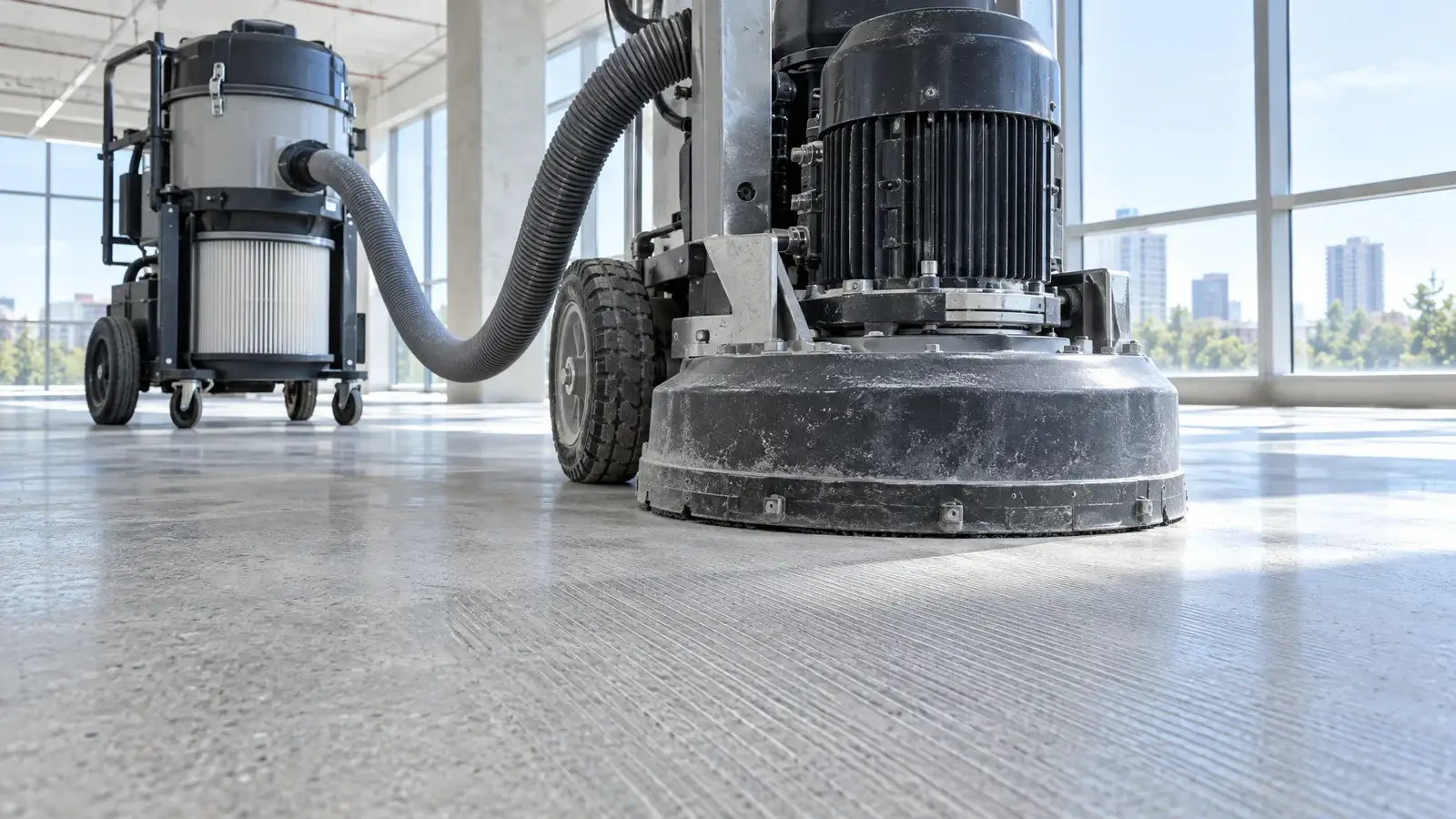 P-01Prep & RepairDiamond GrindingThe step that decides the result: grinding the surface flat, clean and ready.See the service
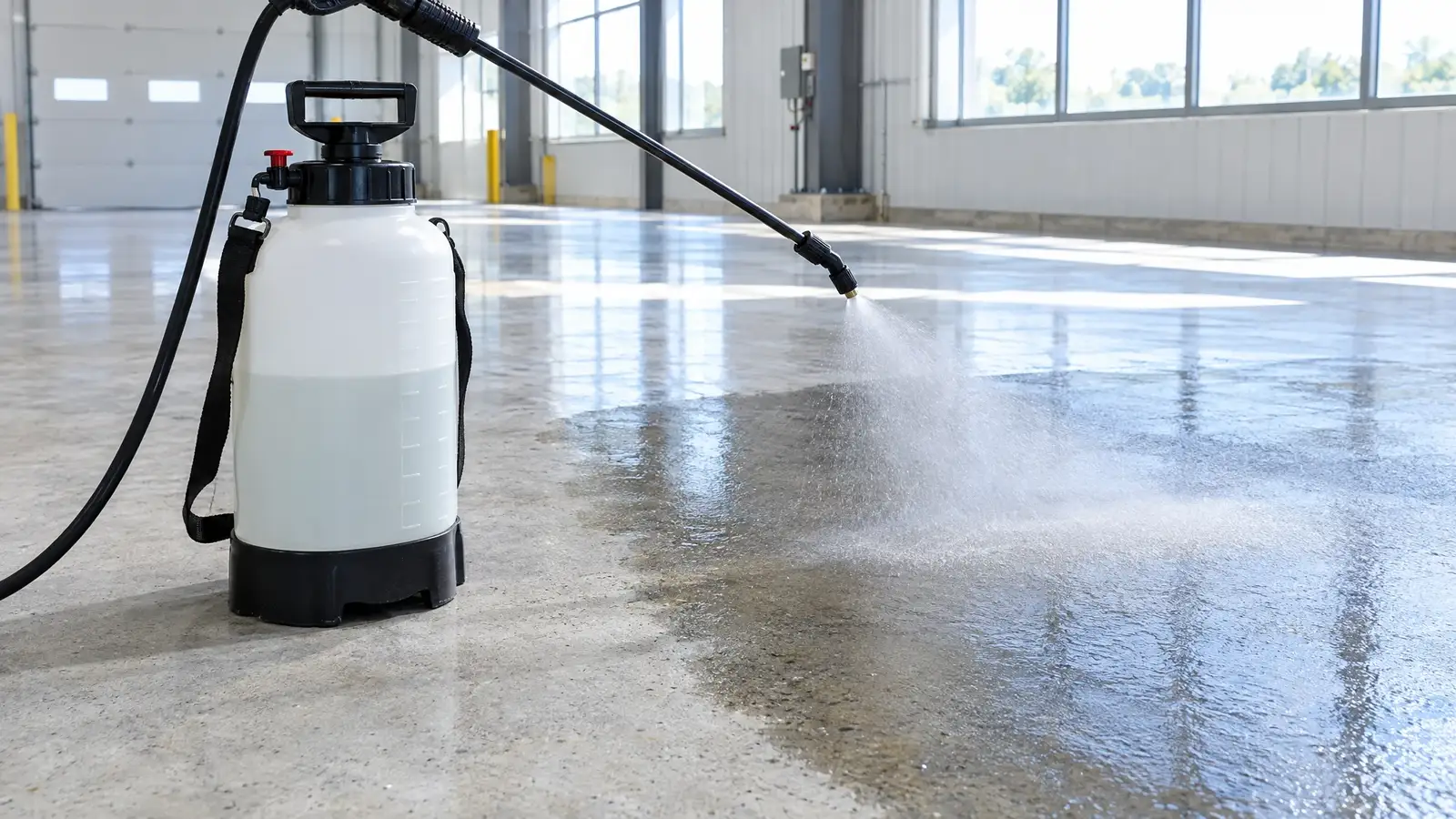 F-02Finishes & ColorDensifier & HardenerThe invisible step that makes the slab harder, tighter and shinier.See the service
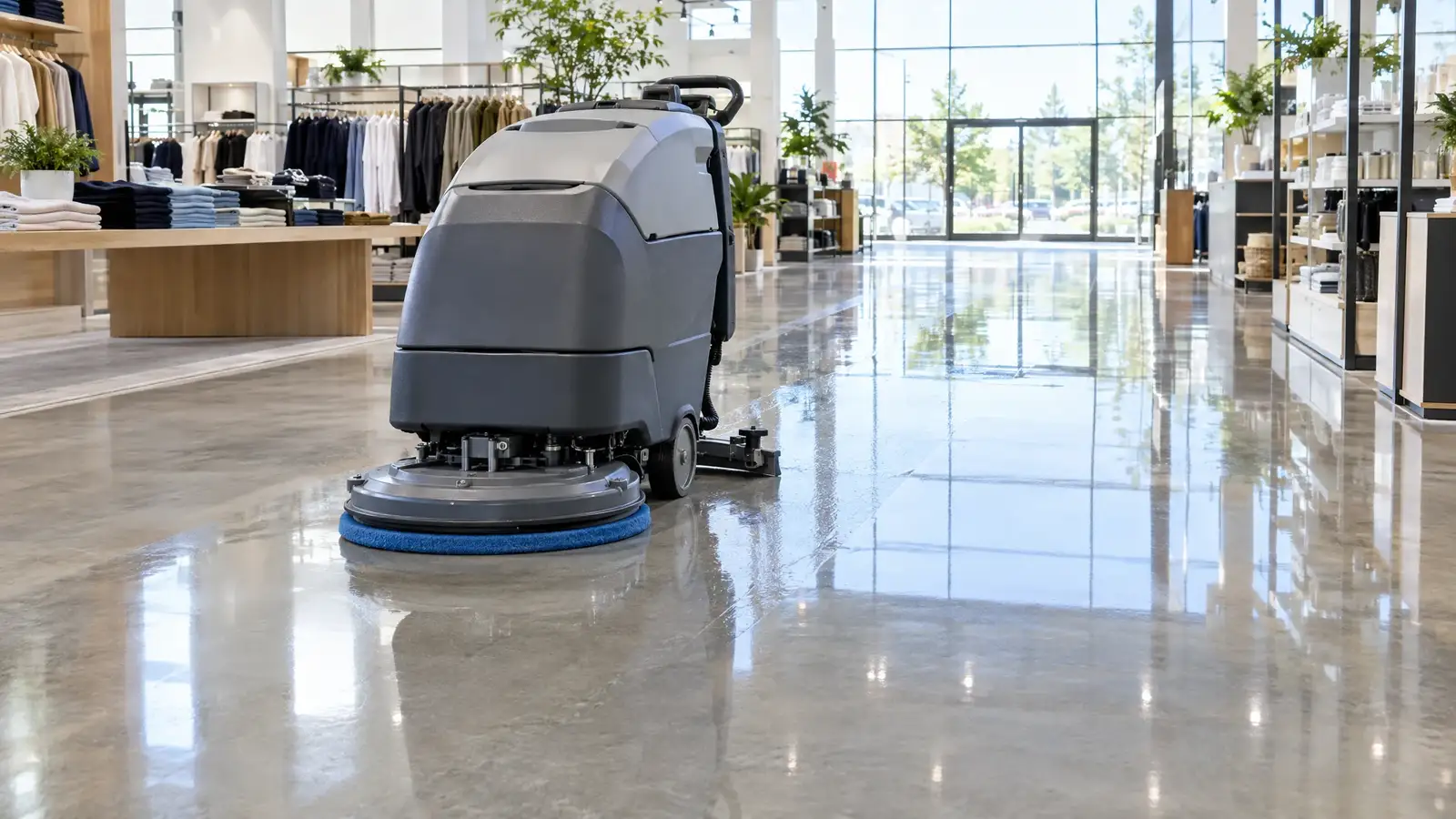 C-01Care & RestorationMaintenance ProgramsThe shine stays when the care is simple, regular and matched to the floor.See the service
Guides that help you decide
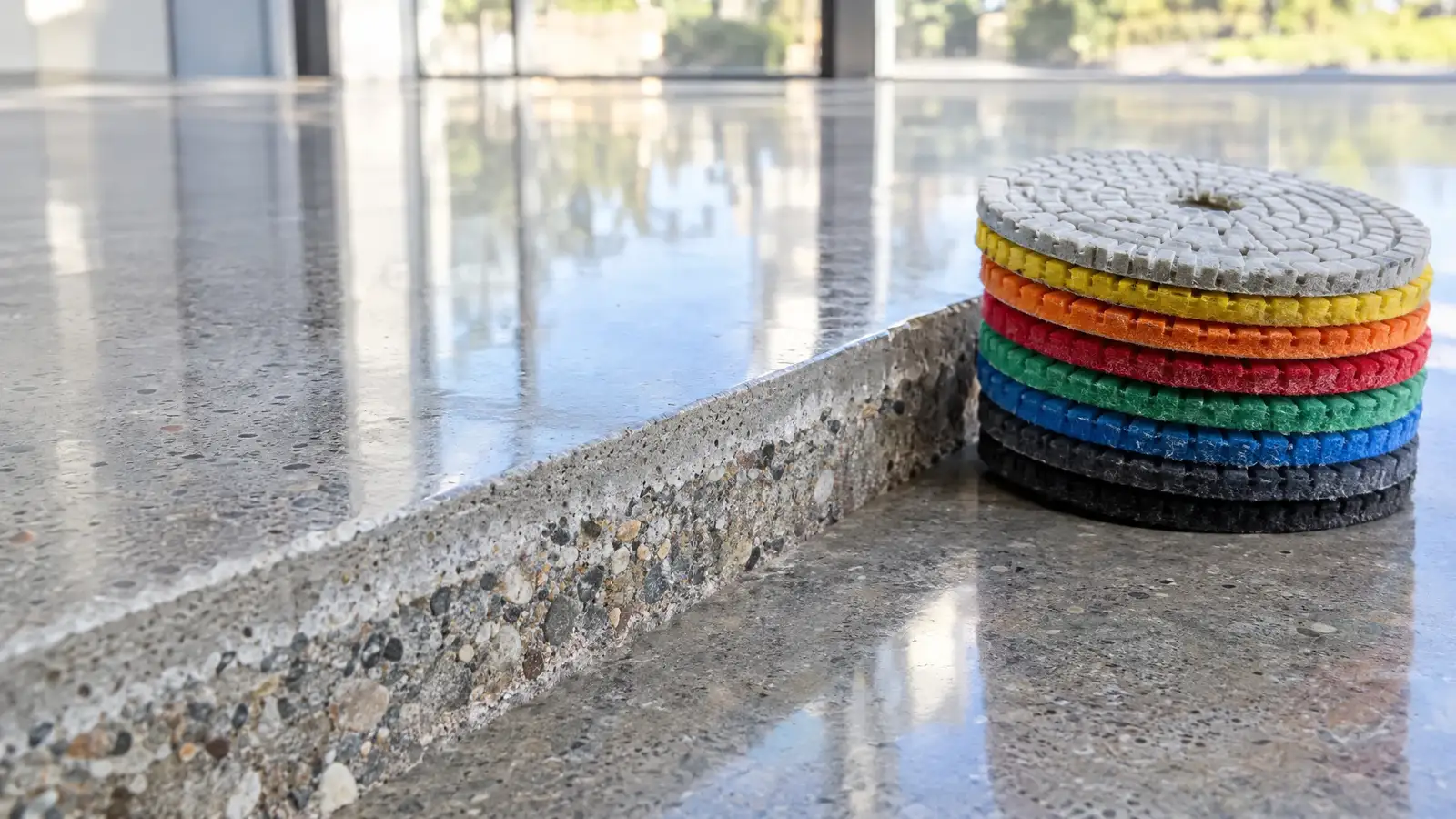 What Is Polished Concrete? A Plain-English GuideNot a coating, not a paint: how a concrete slab becomes a glossy, hard, low-maintenance floor.2 min read
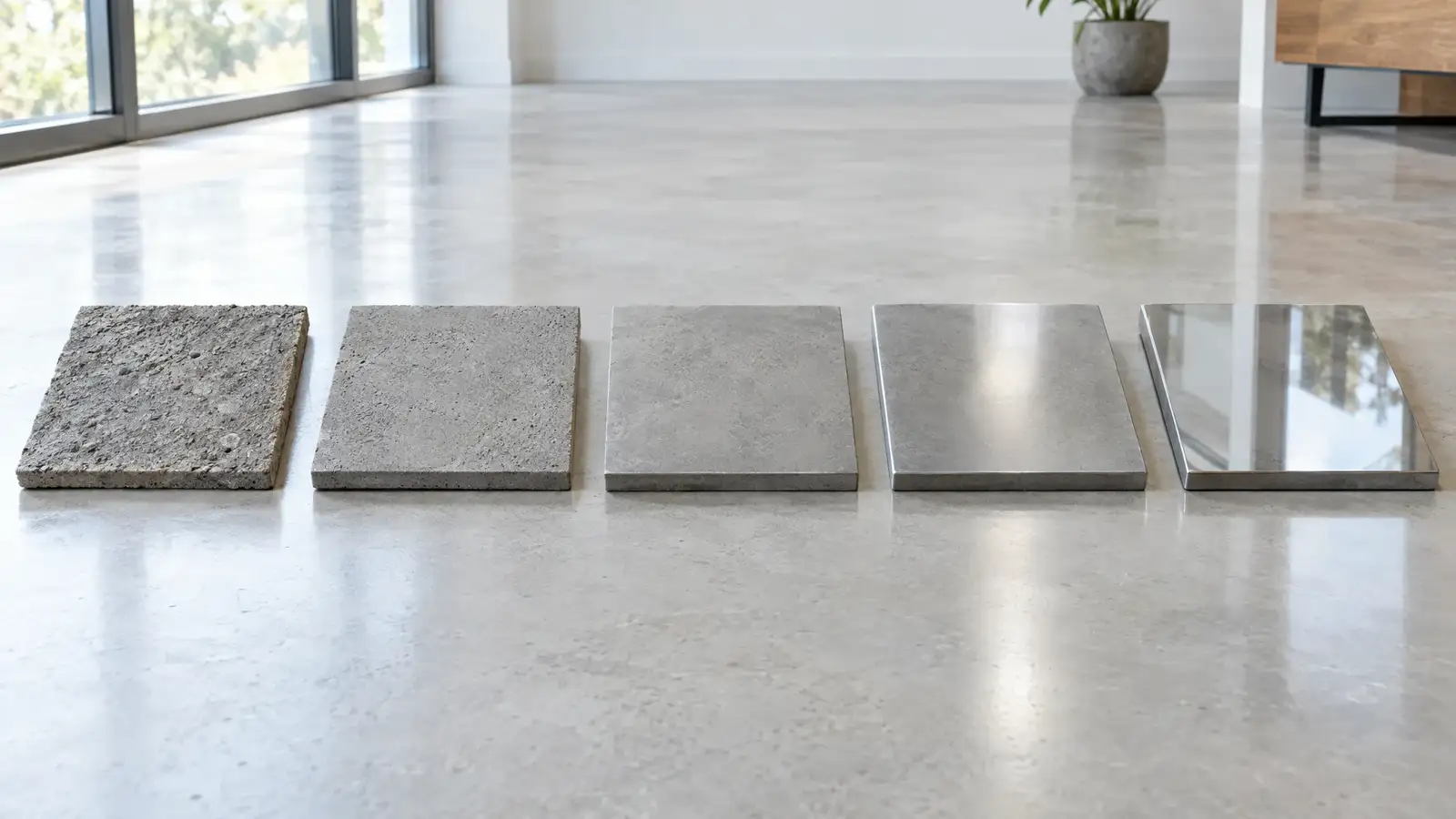 The Polished Concrete Process, Step by StepFrom raw slab to mirror shine: every stage, what it does and why the order matters.2 min read
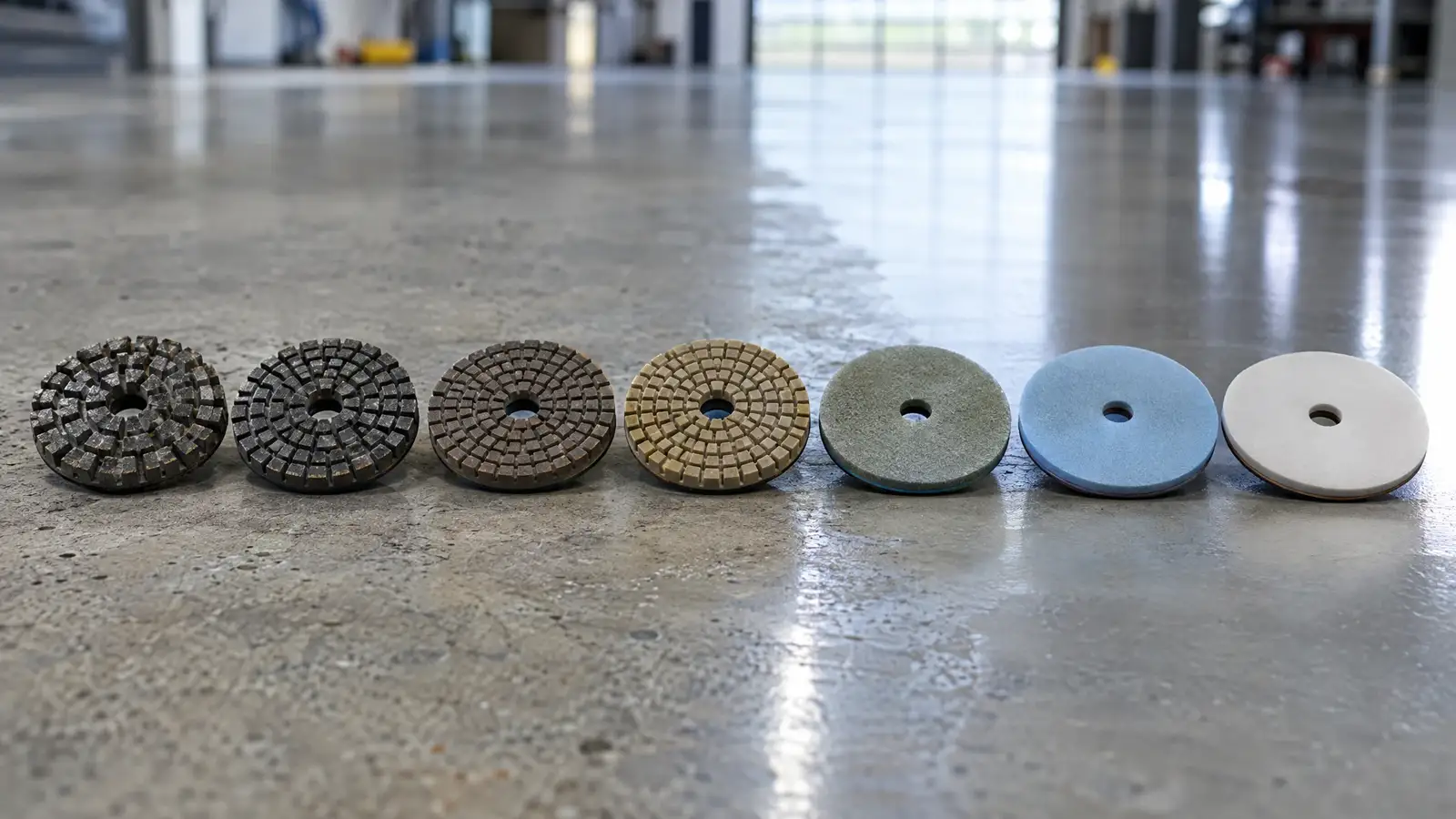 Concrete Polishing Grit Guide: What the Numbers MeanMetal-bond to resin, 30 to 3000: how grit numbers translate into scratch, sheen and clarity.2 min read