Grit in simple terms
A grit number describes how coarse a diamond tool is. Low numbers cut fast and leave deeper scratches. High numbers cut gently and leave a finer surface that reflects light.
A typical ladder
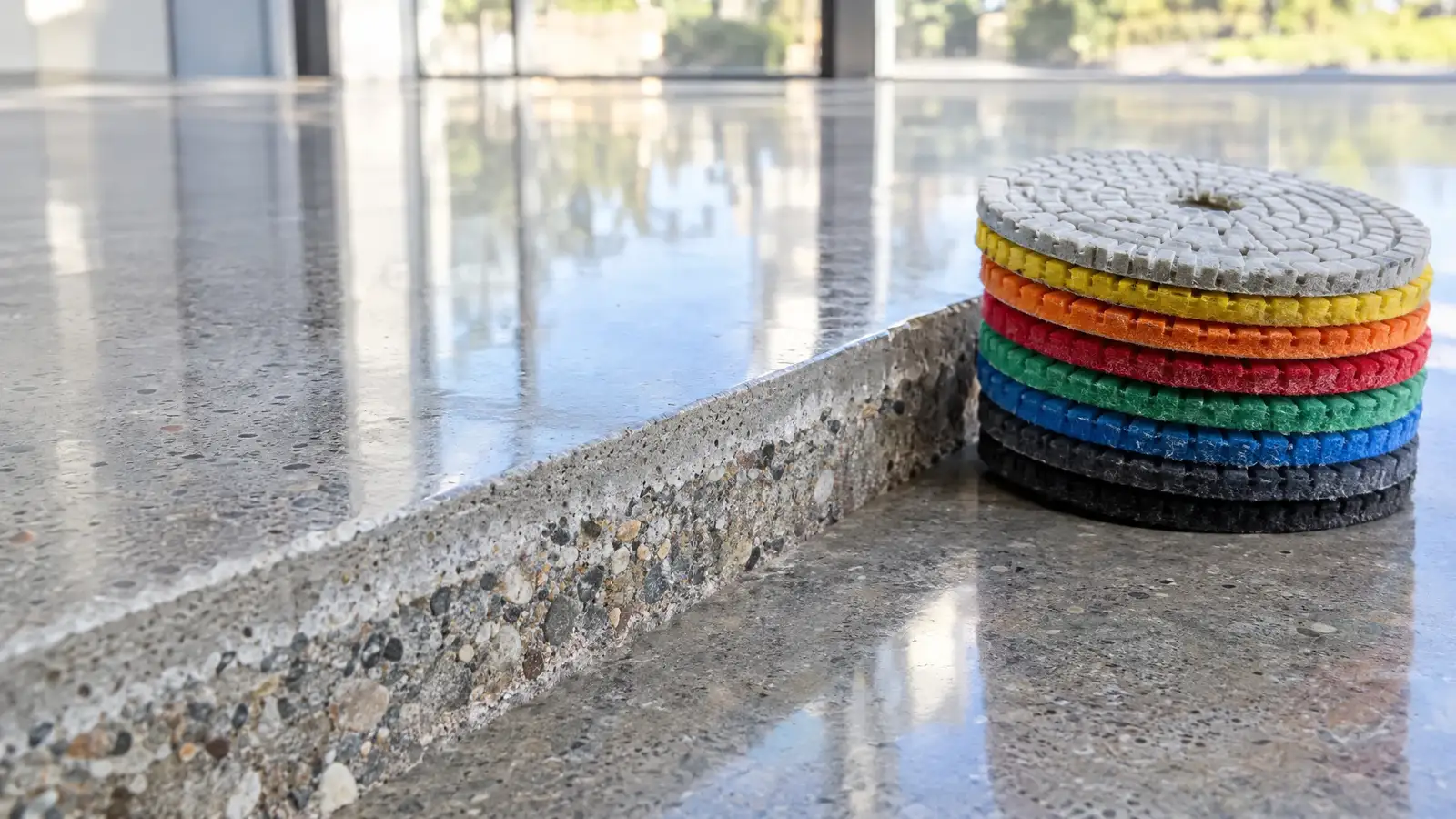
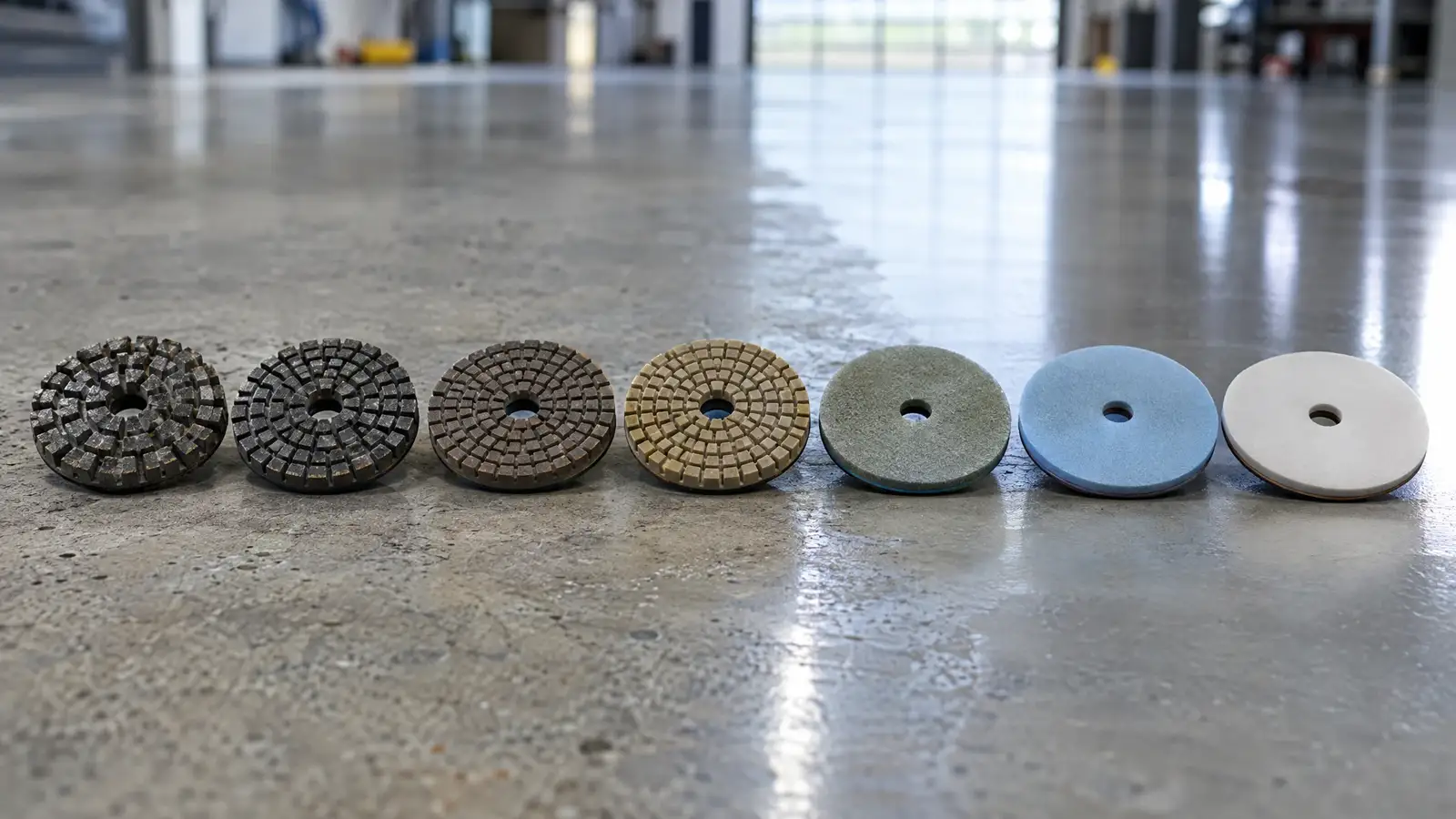
Coarse steps, often in the 30 to 80 range, remove coatings and level. Mid steps, around 100 to 400, refine the surface and are used with densifier. Fine steps from about 800 up to 1500 and 3000 produce the high shine.
Metal versus resin
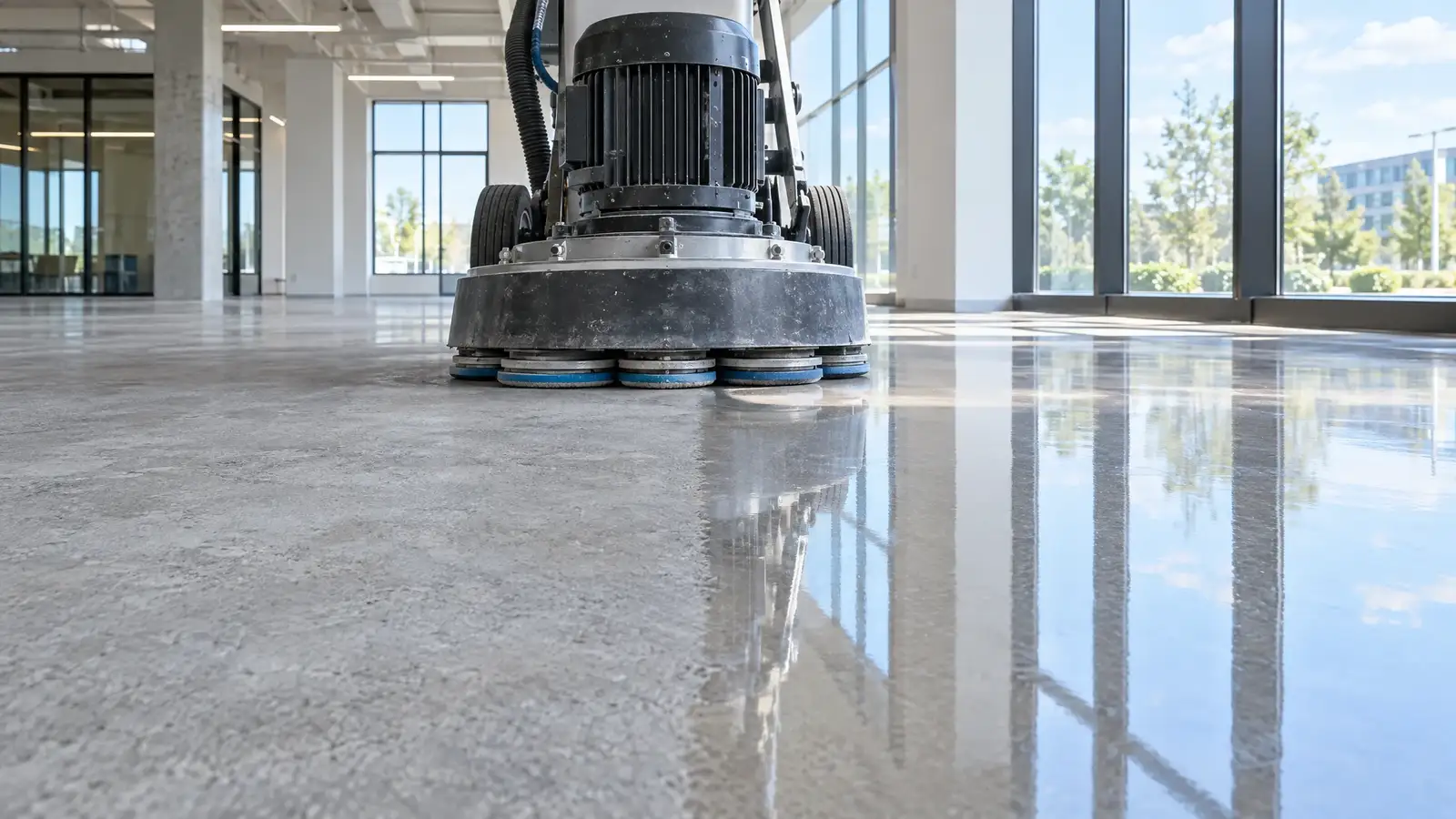
Metal-bond diamonds do the heavy cutting. Resin-bond diamonds do the refining and polishing. The change between them is a key moment in the process.
Why you do not just start fine
Fine tools cannot remove deep scratches or coatings. Going up in the right sequence erases the previous scratch pattern. The final result is only as good as the steps before it.
How grit relates to sheen
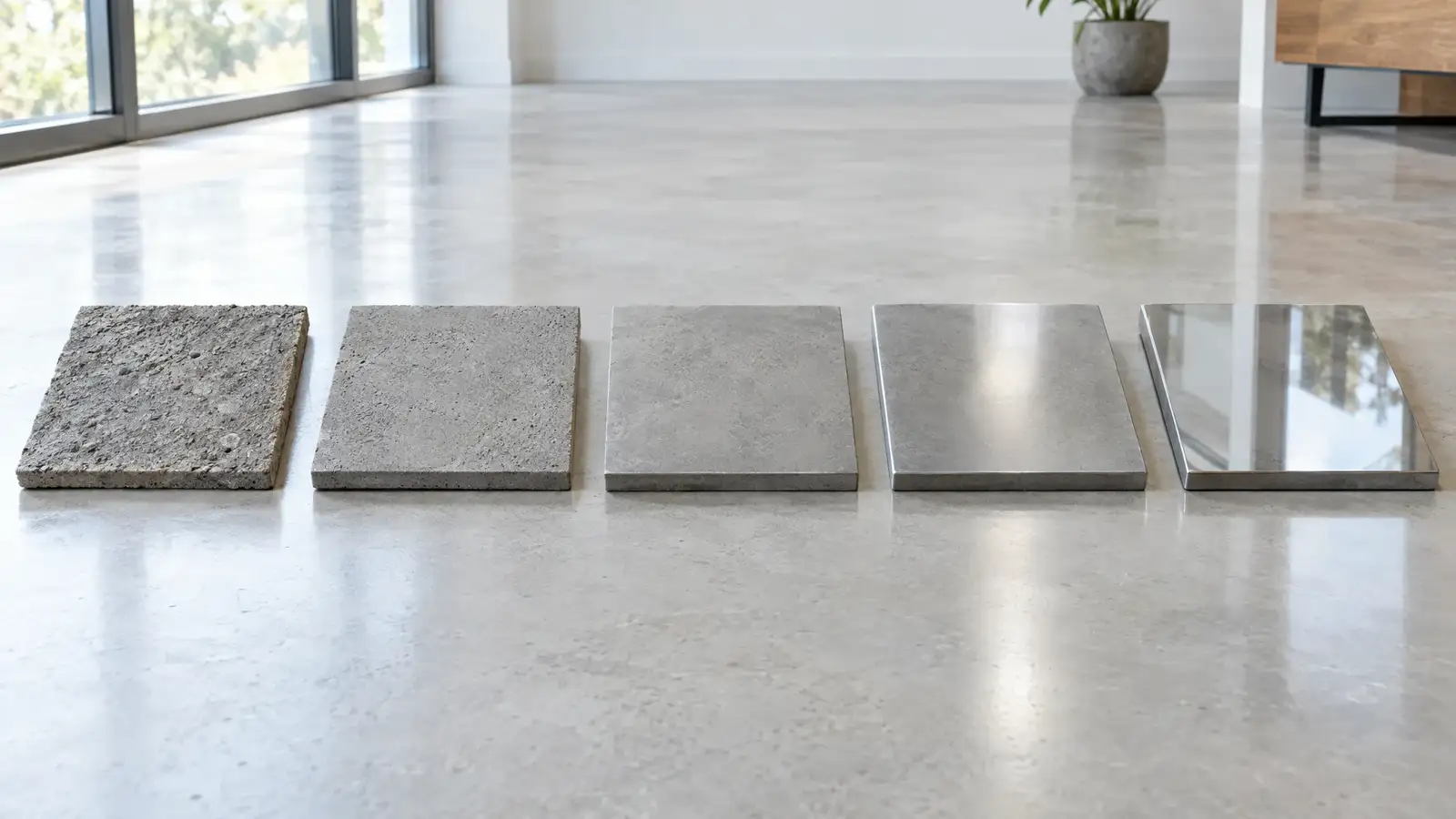
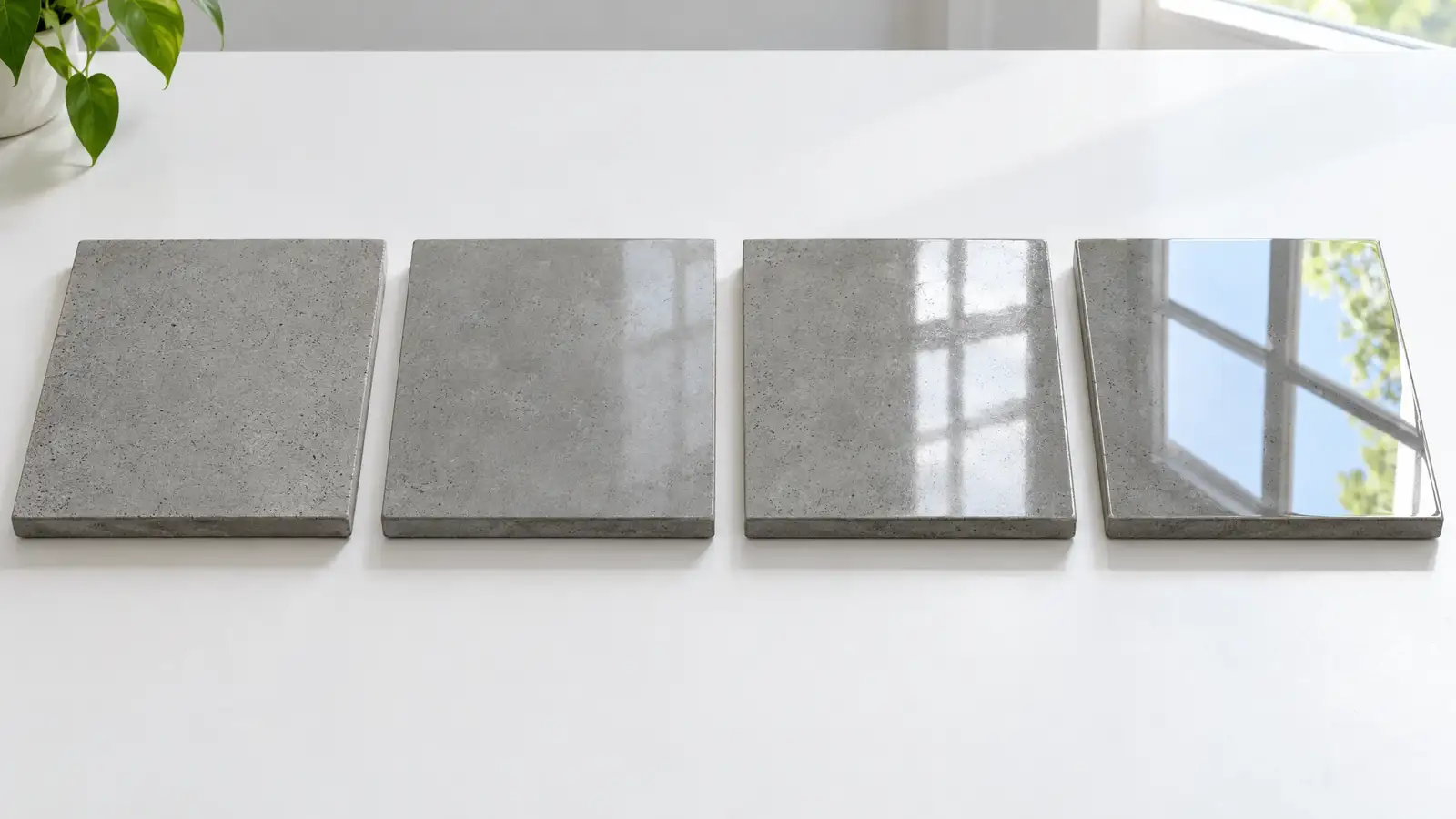
As a rough guide, stopping at a lower grit gives a matte or satin look, and continuing to the finest grits gives a high gloss. The exact outcome depends on the slab and the process.
Reading a grit ladder
A common ladder runs from very coarse metal tools through several resin stages. The Grit Ladder tool on this site shows the same warehouse floor at each stage, so you can see how the surface changes from rough and gray to soft and reflective.
Why higher is not always the goal
A very high final grit gives a deep mirror, but it also shows every scuff and can feel slick when wet. For busy kitchens, entrances and loading areas, a satin or semi-gloss finish is often the better working choice.
Choosing the final grit is really a decision about look, safety and upkeep together.
Grit and slab hardness
Soft slabs can be damaged by tools that are too aggressive, and very hard slabs can glaze tools that are too fine. That is why professionals test the concrete and pick bond types to match, instead of using one fixed set of pads for every job.
Grit and aggregate
The depth of the first grinding steps decides how much sand and stone shows. Light cuts give a cream look, deeper cuts give salt-and-pepper or full aggregate. Grit then controls how glossy that exposed surface becomes.
Quick answers
Is a higher final grit always better?
Not always. Very high gloss shows scratches and can be slippery when wet. Many floors are best at satin or semi-gloss.
Do all floors use the same grit set?
No. Hard and soft slabs need different tools and steps.
What grit gives a mirror finish?
Mirror-like floors usually finish with very fine resin pads in the 1500 to 3000 range, on a well-densified slab.