The pros
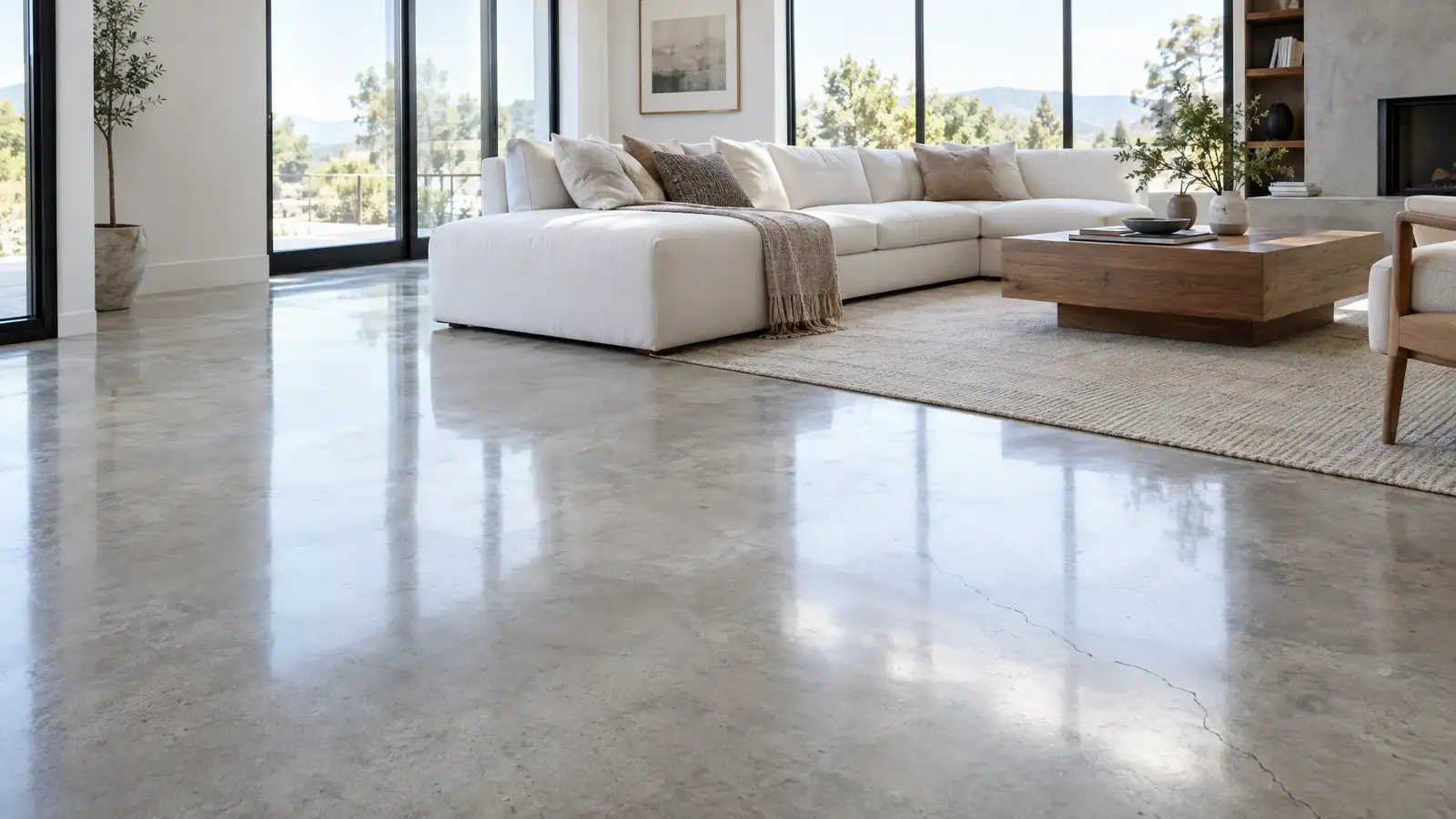
Durable and abrasion resistant. No coating to peel. Easy to clean. Reflective, which brightens spaces. Works with the slab you already have. Can be refreshed. Compatible with many looks, from natural to colored.
The cons
Hairline cracks and joints stay visible. Hard on dropped glass and dishes. Can be slippery when wet at high gloss. Moisture issues in the slab must be solved first. Some slabs have uneven patches that show.
Cool and hard underfoot
Concrete feels cool underfoot, welcome in Florida heat. Some people want a rug for comfort or sound.
Who it suits
Owners who like a modern, honest material, want low long-term upkeep and accept natural variation.
Hidden benefits
A polished floor can cut down on waxing, stripping and recoating. It reflects light, which can make spaces feel brighter. It also uses the slab you already have, so there is no extra material on top.
Honest limits
Concrete is hard and can feel tiring to stand on all day, so mats help where staff stand for long periods. Spills of acids or strong cleaners can etch the surface. Cracks and joints are part of the slab and will stay visible, although they can be repaired and filled.
Who tends to love it
Owners who want a floor that is easy to clean, looks modern and does not need a new surface every few years. People who prefer a seamless, warm carpet or a very soft floor may prefer other options.
Quick answers
Is it too hard to stand on?
Anti-fatigue mats help where people stand for long periods.
Will it crack?
Concrete can crack. Polishing does not cause cracks, and repairs help.