Good candidates
Sound, well-cured slabs with reasonable hardness and flatness. Slabs that were finished with a hard trowel. Floors with minor stains and coatings that can be ground off.
Challenging slabs
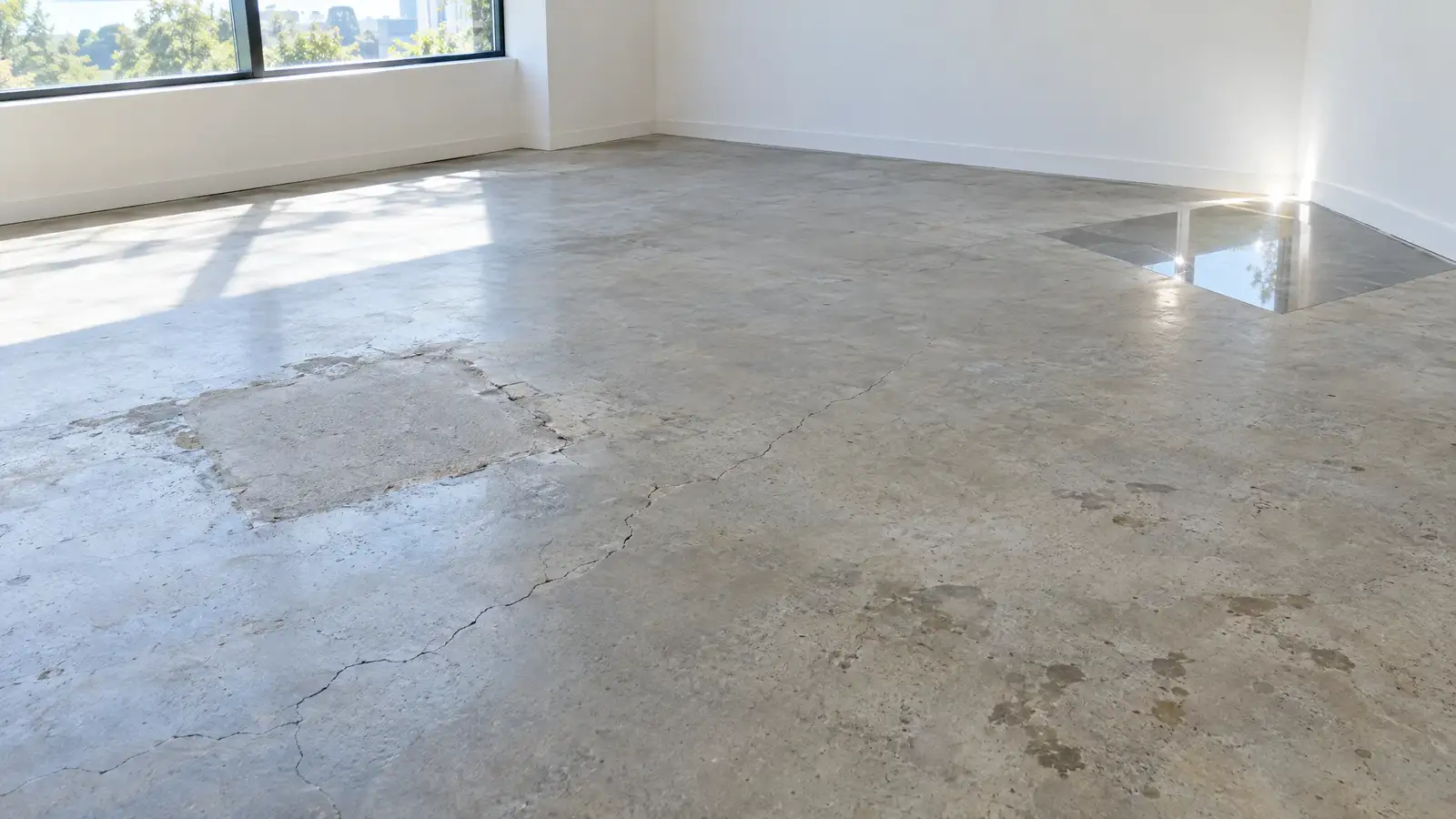
Very soft or sandy concrete. Floors with many patches of different mixes. Slabs contaminated with oils that have soaked deep. Floors with a lot of structural cracking.
What we test
Hardness, moisture, surface condition and a small polishing test. Results guide the recommendation.
When an overlay is better
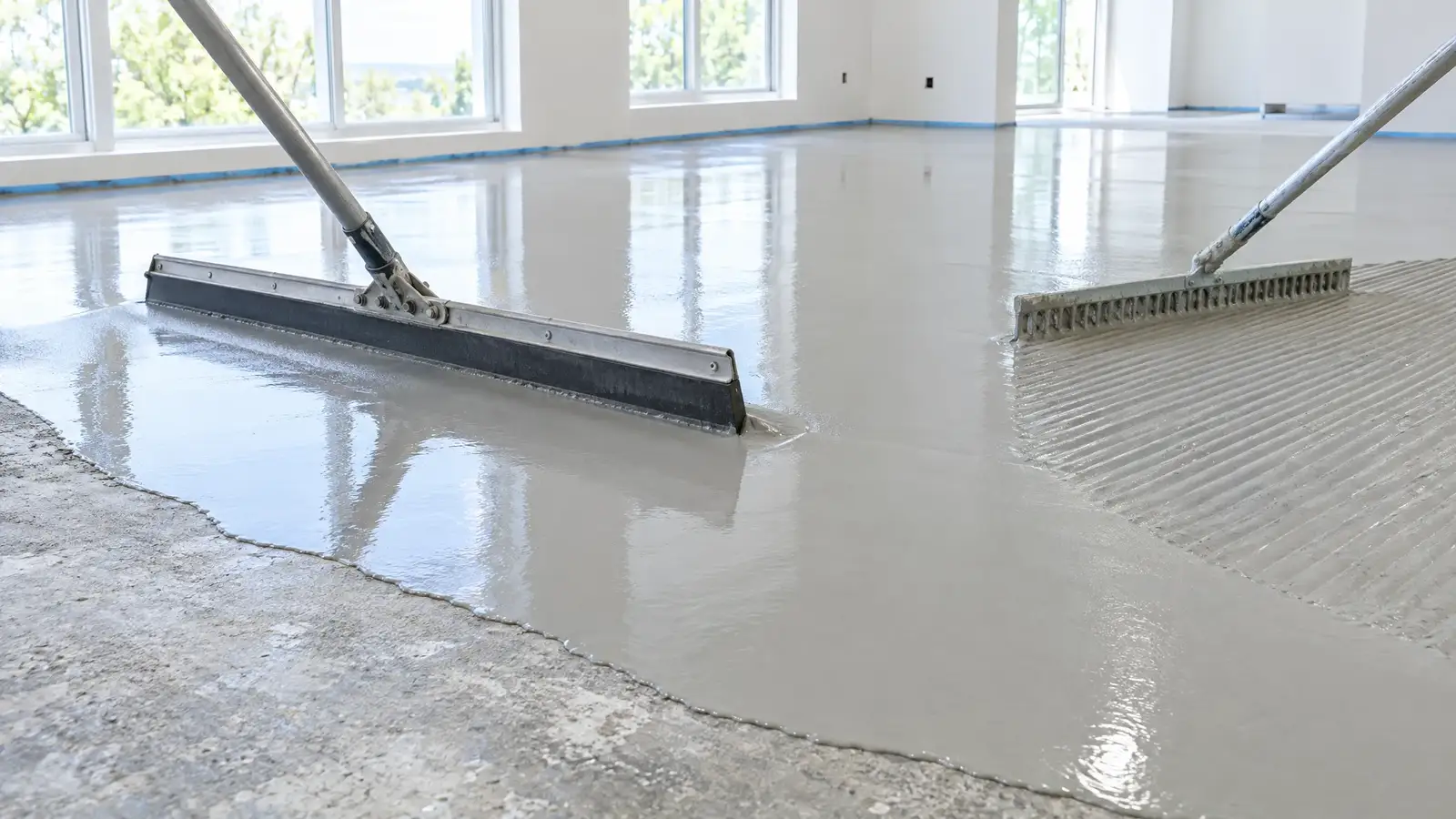
If the slab is too rough or damaged, a polishable overlay may produce a better result than polishing the existing surface.
What we look at first
We tap the slab, scratch it, test hardness, check for cracks and moisture, and look at past coatings and repairs. Photos you send through the form help us plan the visit.
Slabs that need extra work
Floors with deep stains, old adhesive, heavy coatings, uneven patches or very soft surfaces can still be polished, but they need more preparation and may not reach the same look as a clean new slab.
When the answer is not polishing
If a slab is badly broken, heavily contaminated or has serious moisture problems, another solution may serve you better. We will tell you plainly instead of forcing a finish that will disappoint.
Quick answers
Can a power-troweled slab be polished?
Yes. A hard-troweled finish is helpful.
What if my slab is old?
Age alone is not a problem. Condition is what matters.