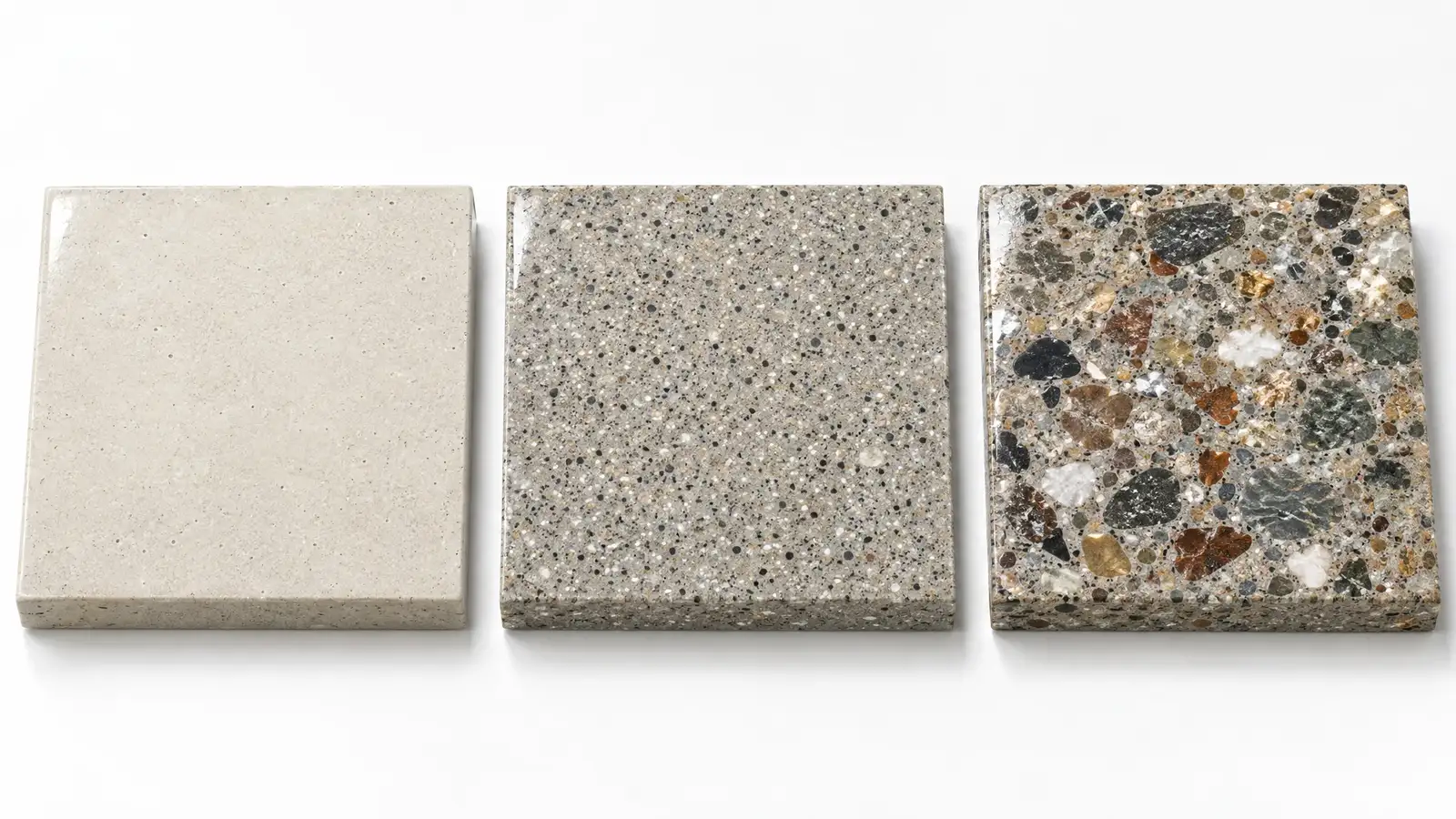
Cream
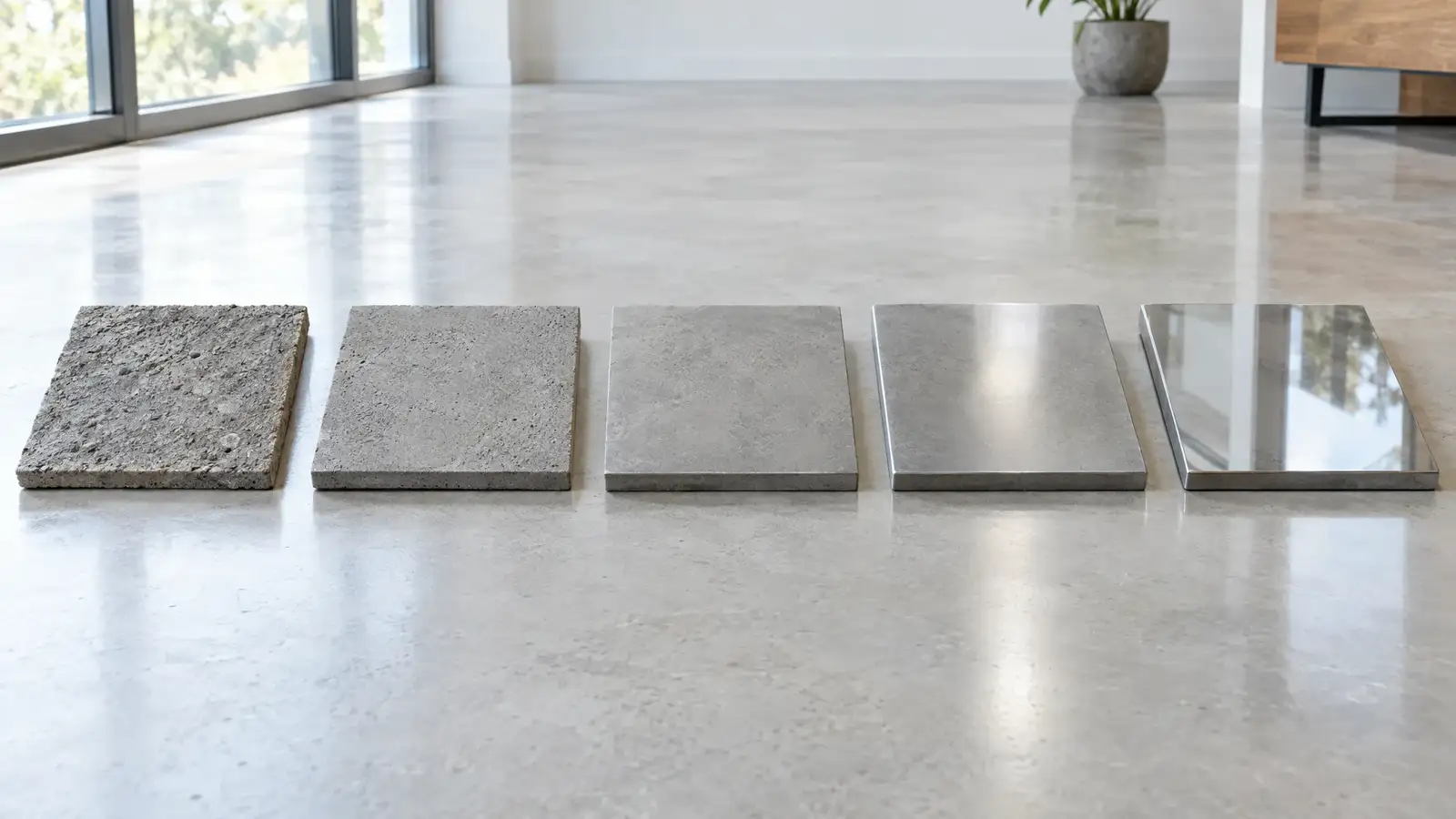
A smooth surface of cement paste with little or no aggregate showing. It is clean and uniform, often chosen for a calm modern look.
Salt-and-pepper
A deeper grind exposes fine sand and tiny stones, giving a speckled surface. It is the most common look and balances character with uniformity.
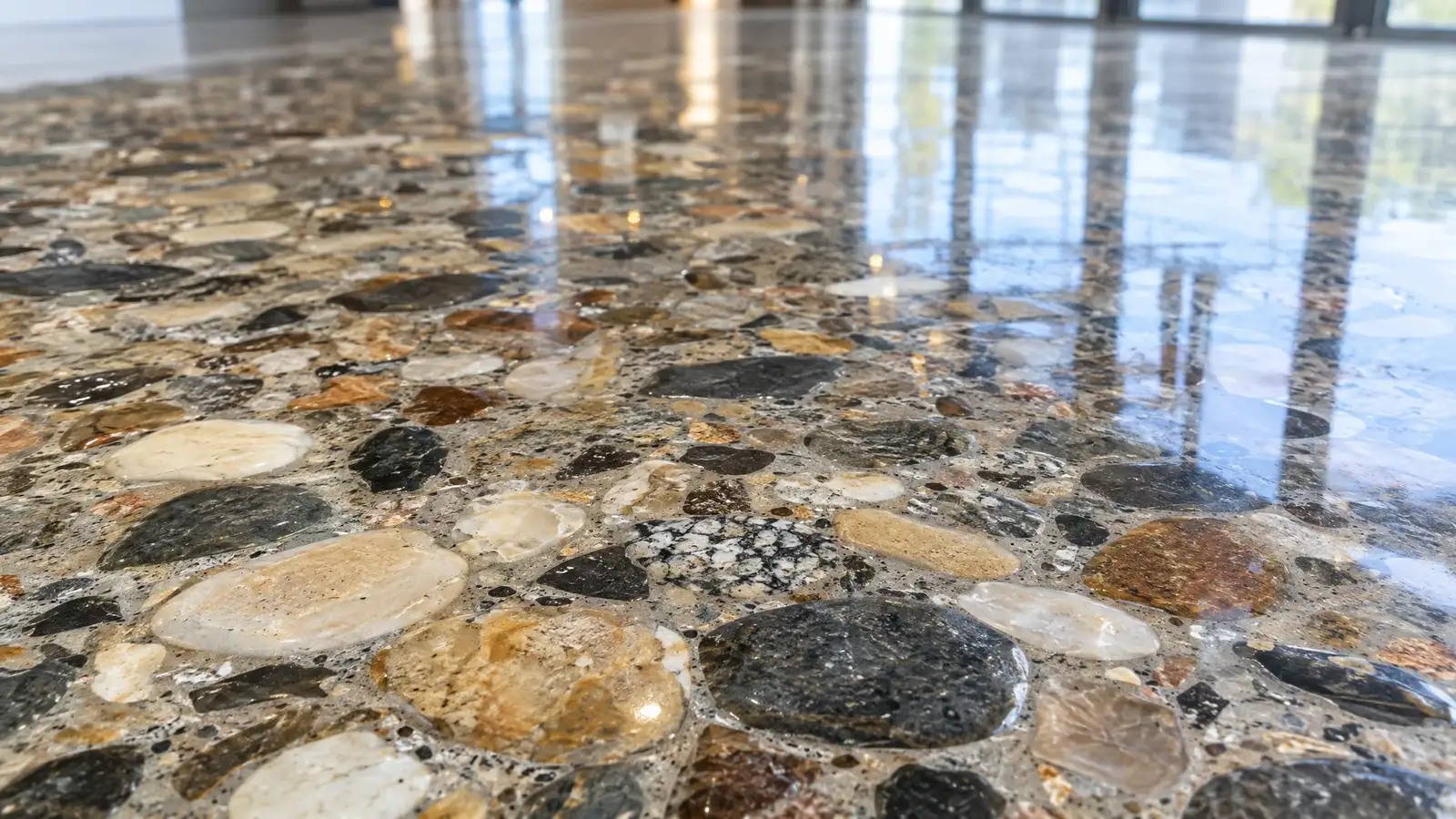
Full aggregate
An even deeper cut exposes larger stones across the floor for a terrazzo-like effect. It takes more grinding and depends on the slab having good aggregate near the surface.
What decides it
The concrete mix, the finishing of the slab and how deep we grind. You cannot add aggregate that is not there, so we test a small area before the decision.
Why the look is decided early
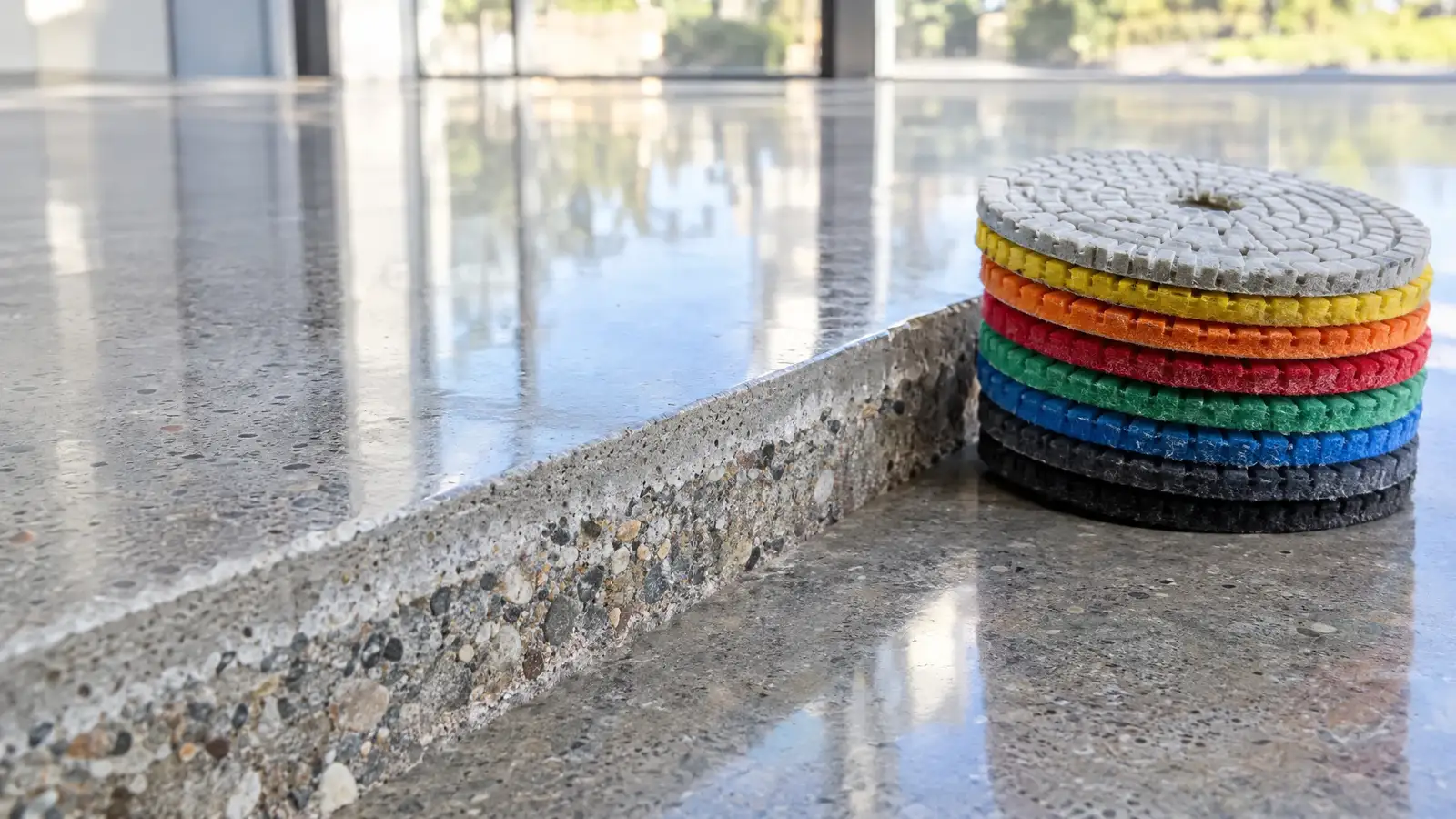
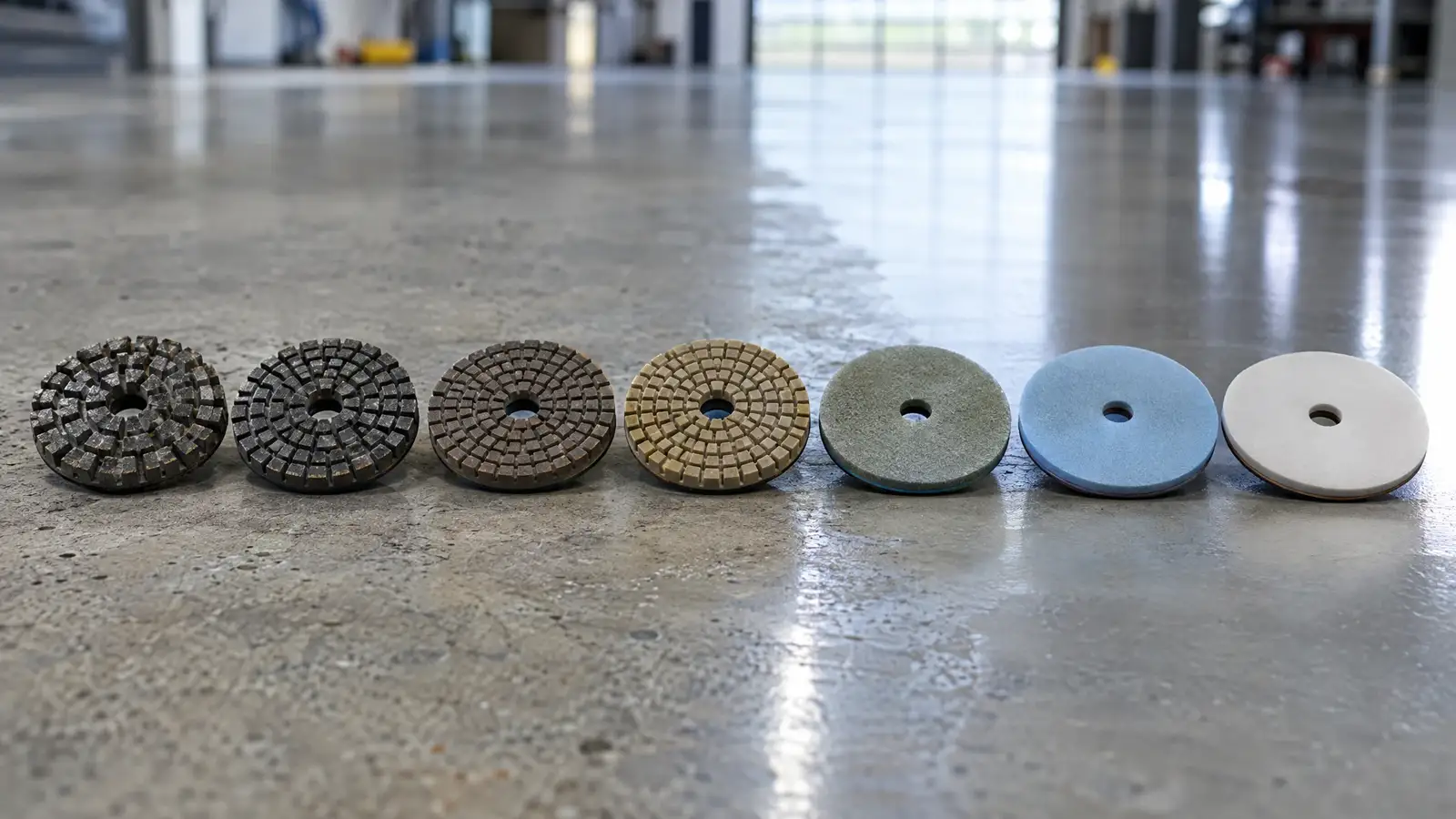
Aggregate exposure is set during the first grinding stages. Once a floor has been ground deeply to show stone, it cannot be made creamy again. That is why the choice belongs at the start of the project.
What the slab already has
Florida slabs vary a lot. Some are finished smooth and hard on top, with little aggregate near the surface. Others have lots of stone just below it. We check how deep the aggregate sits and how even it is before promising a look.
Combining with color
Dye on a cream floor gives a soft, even tone. Dye on a salt-and-pepper or full aggregate floor gives a richer, speckled depth. Neutral grays and whites often look best when the aggregate is part of the design.
Practical points
More exposure means more cutting, which usually takes more time. Exposed stone can also reveal differences between pours and patches. A sample area on your own floor is the best way to decide.
Quick answers
Can you tell what is under my slab?
A test patch will show what is there.
Is deeper exposure harder to maintain?
No, but it needs more grinding up front.