Why Florida is different
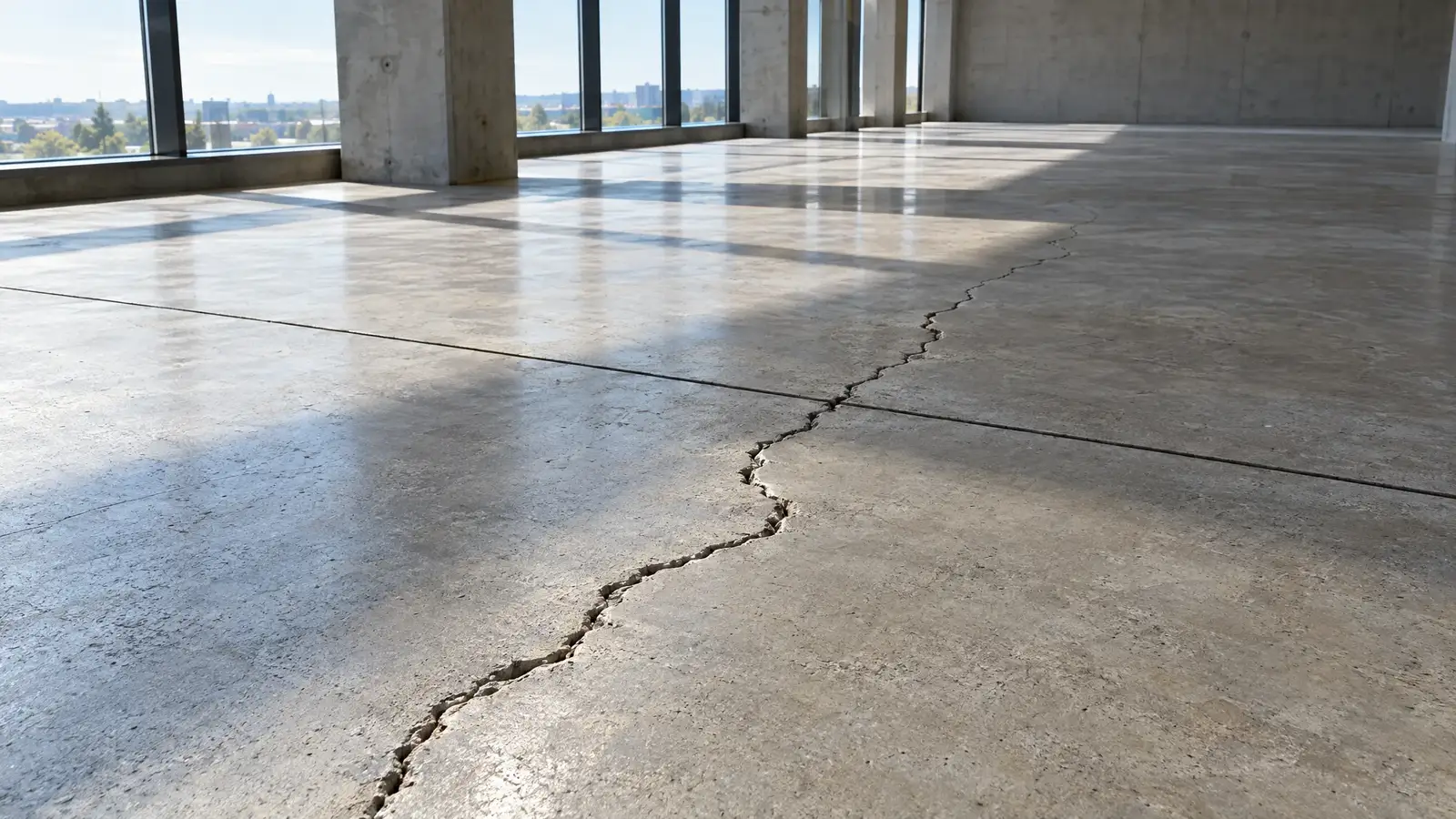
High water tables, heavy rain, humidity and storms push moisture through slabs. Some slabs have a vapor barrier, some do not.
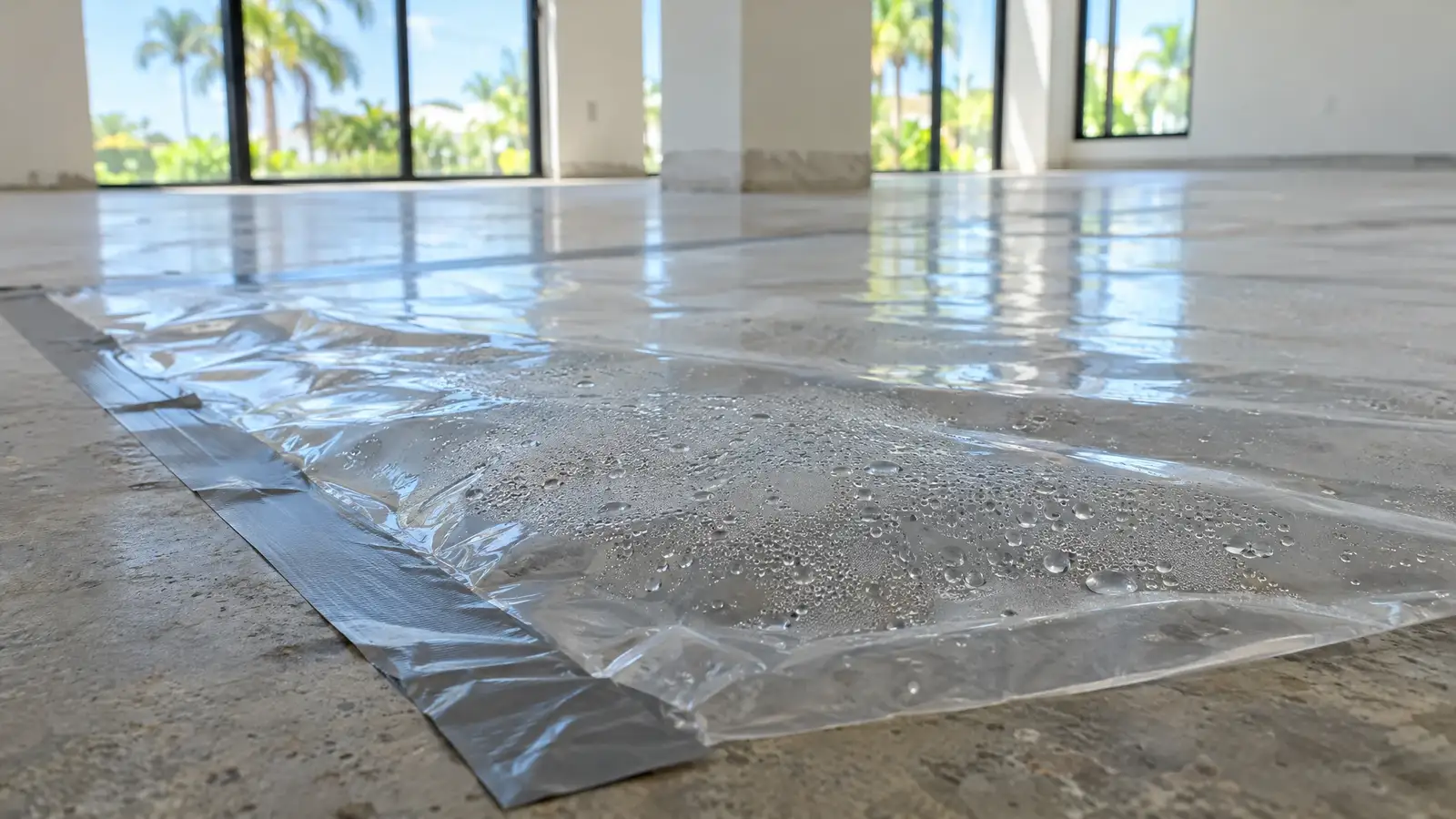
How moisture is measured
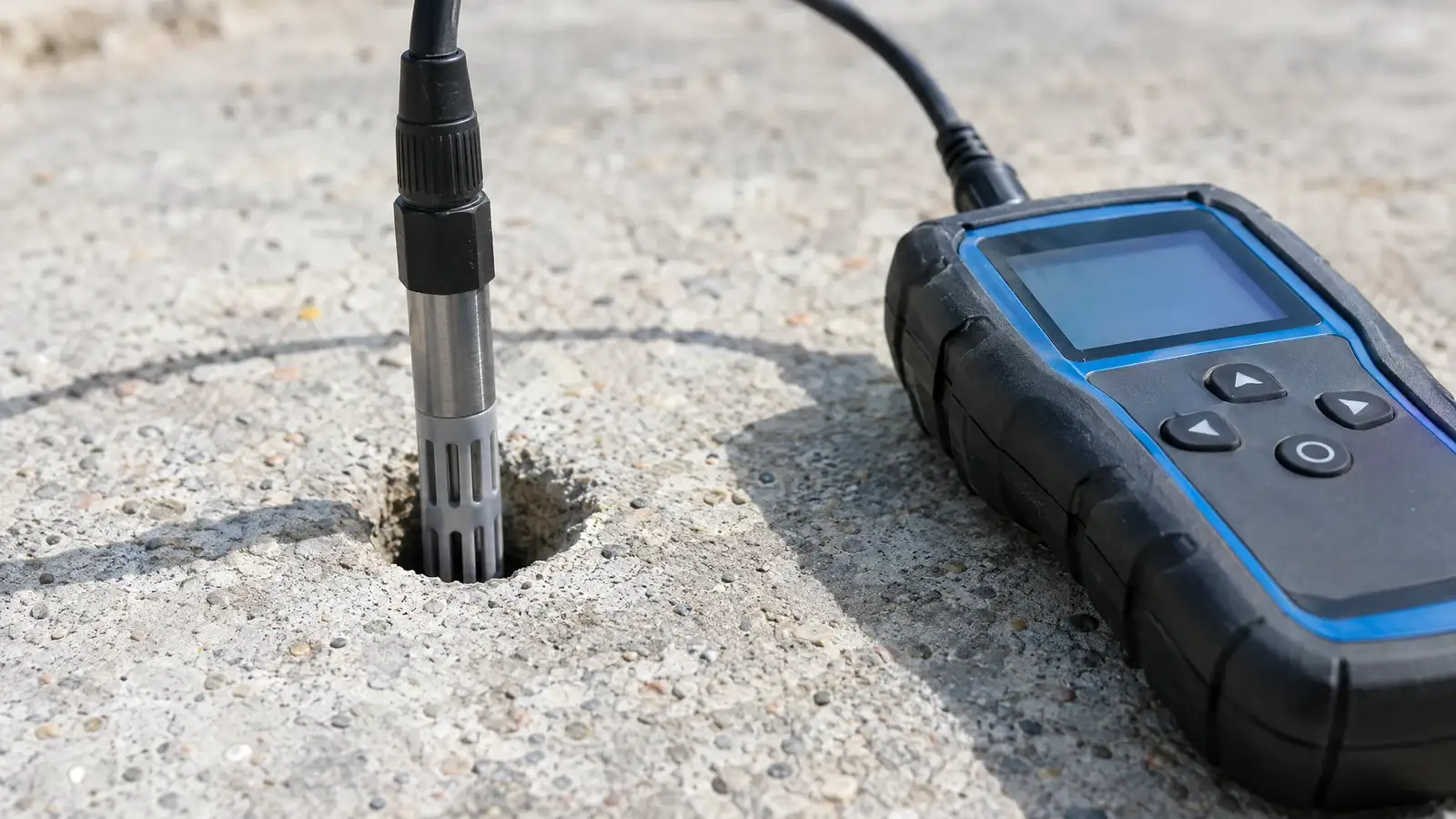
In-slab relative humidity probes and surface tests are used. Results depend on conditions and time.
What the numbers mean
Finish manufacturers publish limits for their products. Polished and densified concrete is more tolerant than many films, but extreme moisture can still cause problems.
Solutions
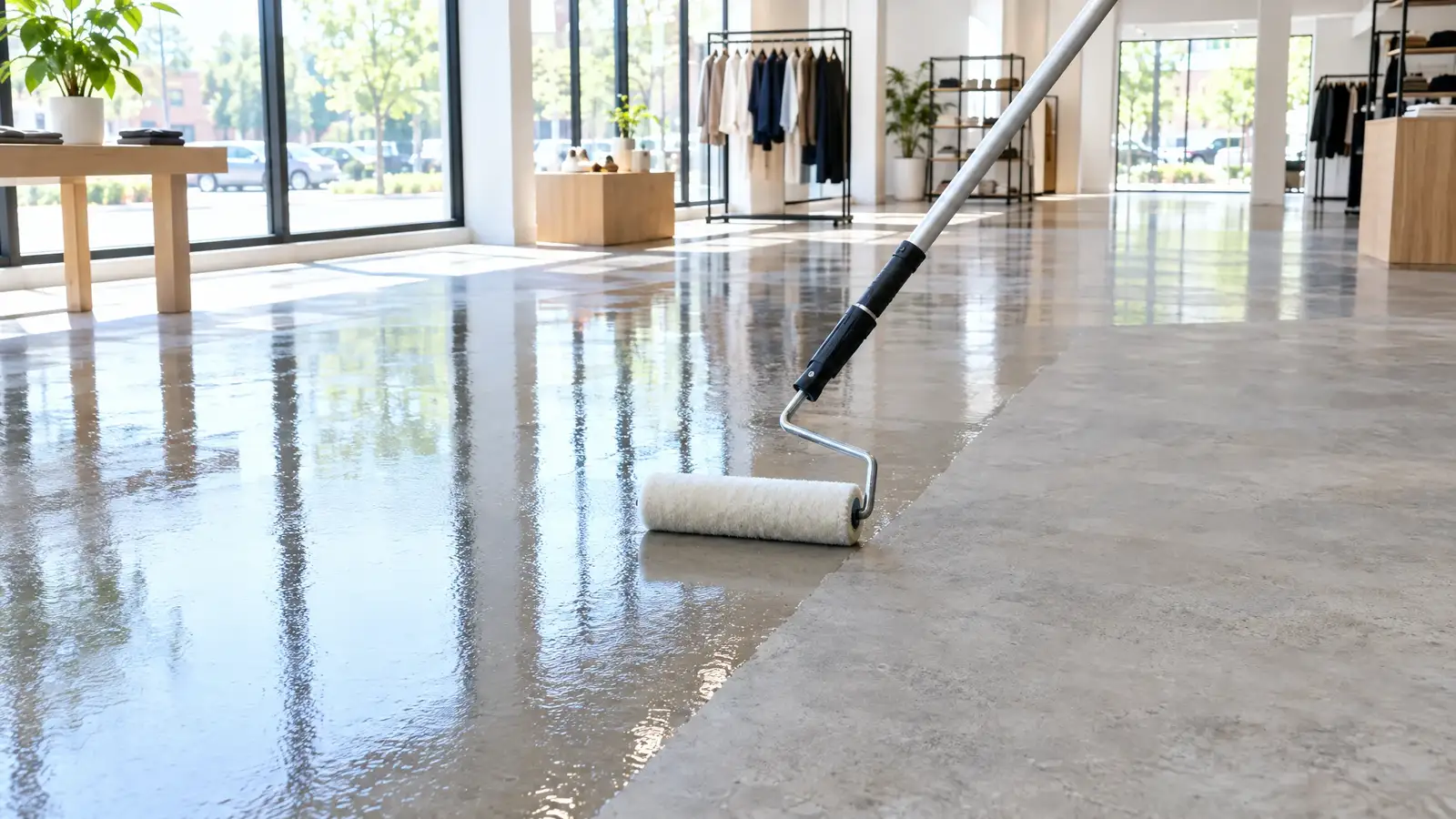
Drying time, ventilation, dehumidification, vapor-reducing treatments and choosing a breathable finish.
Why testing comes first
Moisture moving up through a slab can affect densifier, dye and guards, and it can show as dark patches or a hazy finish. Testing tells us whether a slab is ready and what protection it needs.
Slabs on grade
Many Florida buildings sit on slabs poured directly on the ground. A vapor barrier below the slab helps, but older buildings may not have one. The test results guide the choice of products.
When moisture is high
Options include waiting, using breathable products, adding a moisture mitigation system, or choosing a different finish. We explain each option plainly.
Quick answers
Does every floor need testing?
We recommend it for coatings and suspect slabs.
Can polished concrete trap moisture?
It is more breathable than a film, which is why it works well in humid places.