Why concrete cracks
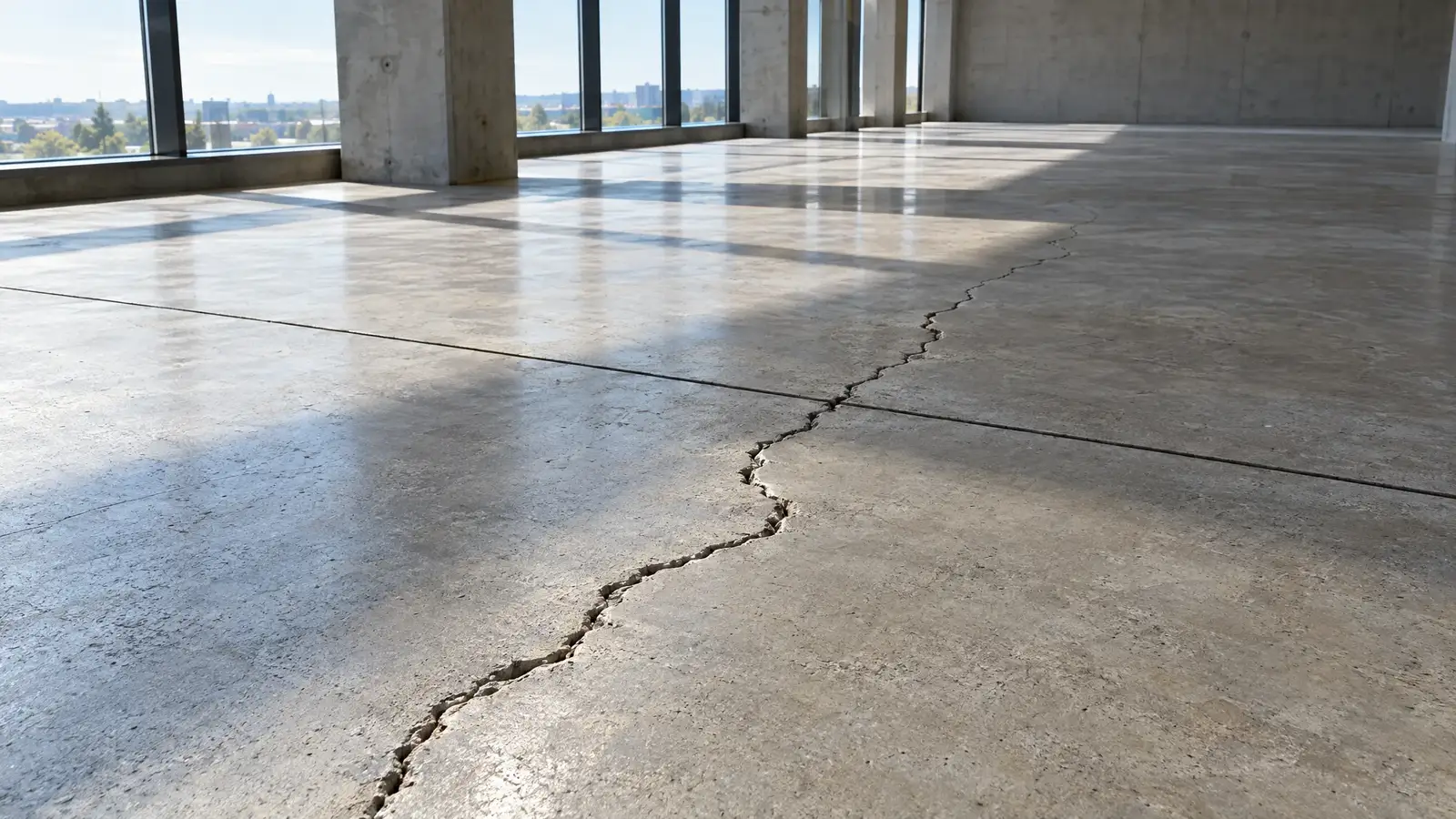
Concrete shrinks as it dries. Movement, soil settlement, loads and temperature changes add stress. Cracks are common and often harmless.
Control joints
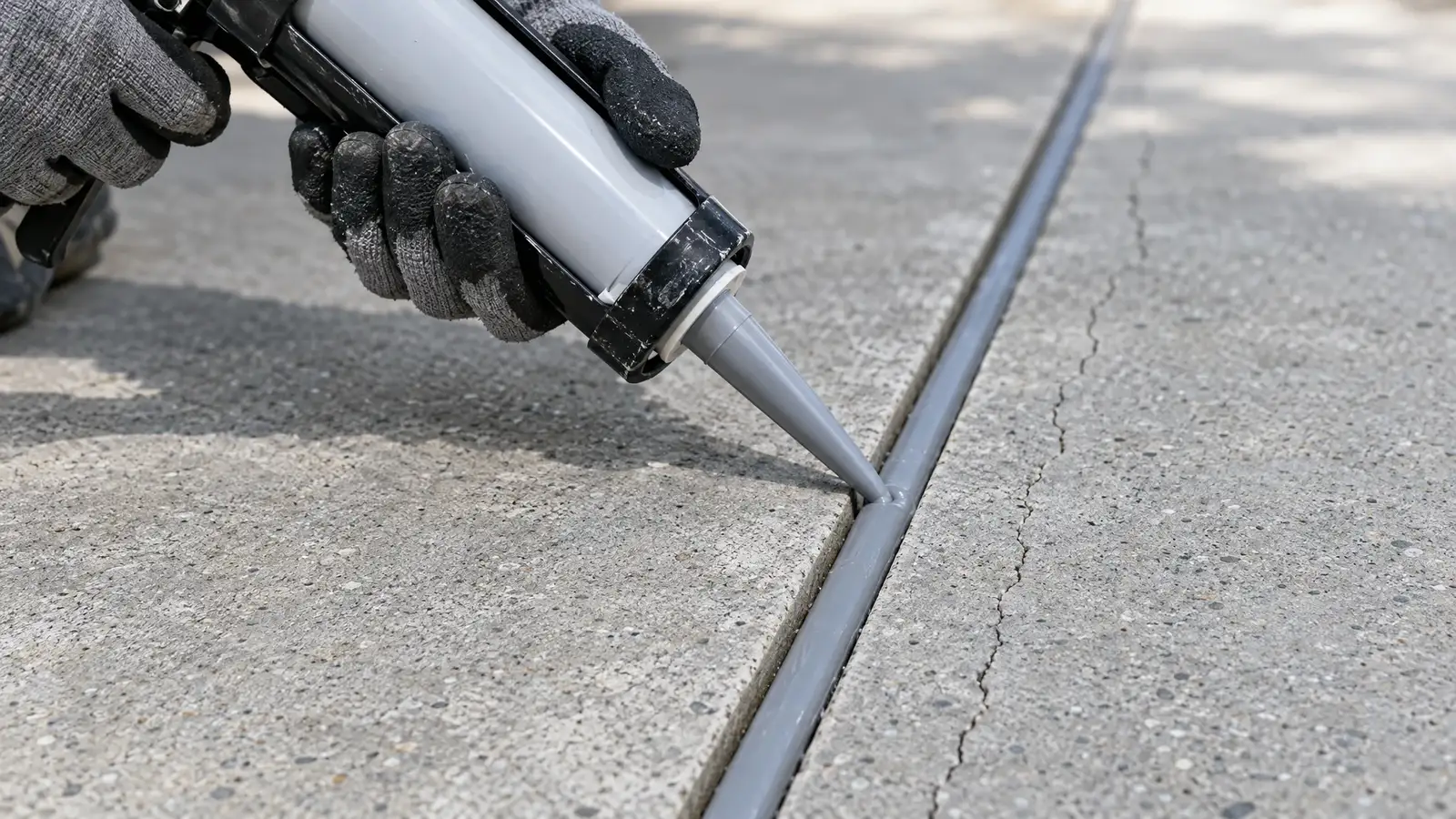
Saw cuts are planned weak lines where cracking is intended to happen. They are repaired in traffic areas.
Types of repair
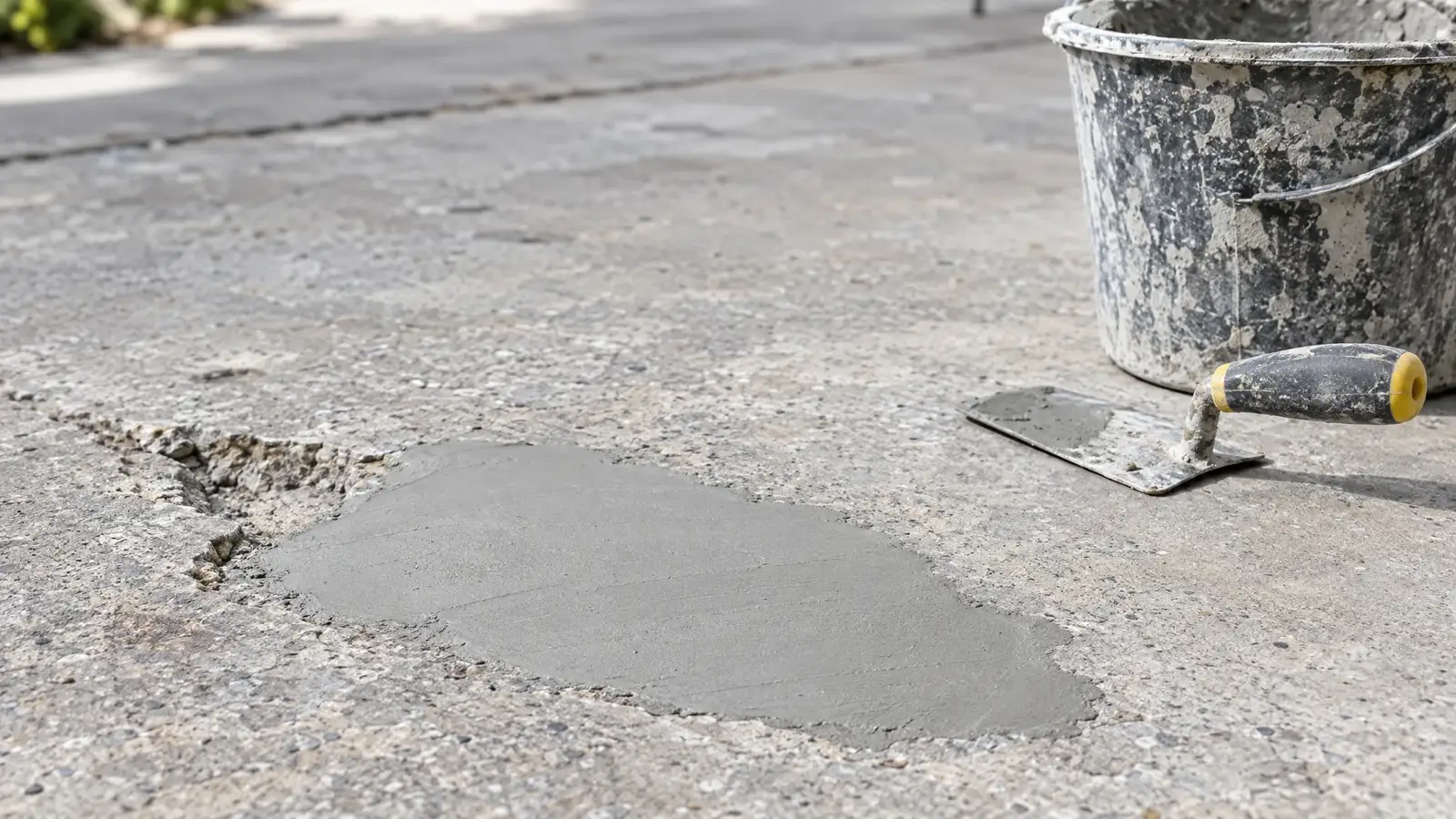
Hairline cracks are often left. Wider cracks are routed and filled with semi-rigid epoxy or polyurea. Moving cracks use flexible fillers.
When to call an engineer
Cracks that are wide, growing, uneven across the crack or accompanied by sinking need a structural opinion.
Hairline cracks and polished floors
Fine shrinkage cracks are normal and often stay visible after polishing. They can be filled to protect the edges and give a cleaner look, but they will not disappear.
Moving cracks
A crack that opens and closes with temperature or that keeps growing may point to a structural or subgrade issue. Flexible fillers can follow small movement, while larger problems need an engineer.
Joint fillers
Rigid or semi-rigid fillers support joint edges under wheels and make the floor easier to clean. Color can be matched to the slab or used as a design line.
Plan repairs before polishing
Repairs are done before the fine steps so the patches are ground flush and blend with the floor. Skipping this order leaves visible differences.
Quick answers
Can I polish over cracks?
Yes, after repair if needed. Lines may remain visible.
Do cracks mean a bad slab?
Not usually.