Install is only the start
Floors cost money for years afterwards: cleaning, waxing, stripping, recoating, repairs and replacement. Polished concrete has fewer of these.
What polishing avoids
No wax cycles. No grout to scrub. No coating to recoat on a schedule. No glue and planks to replace.
Refreshing instead of replacing
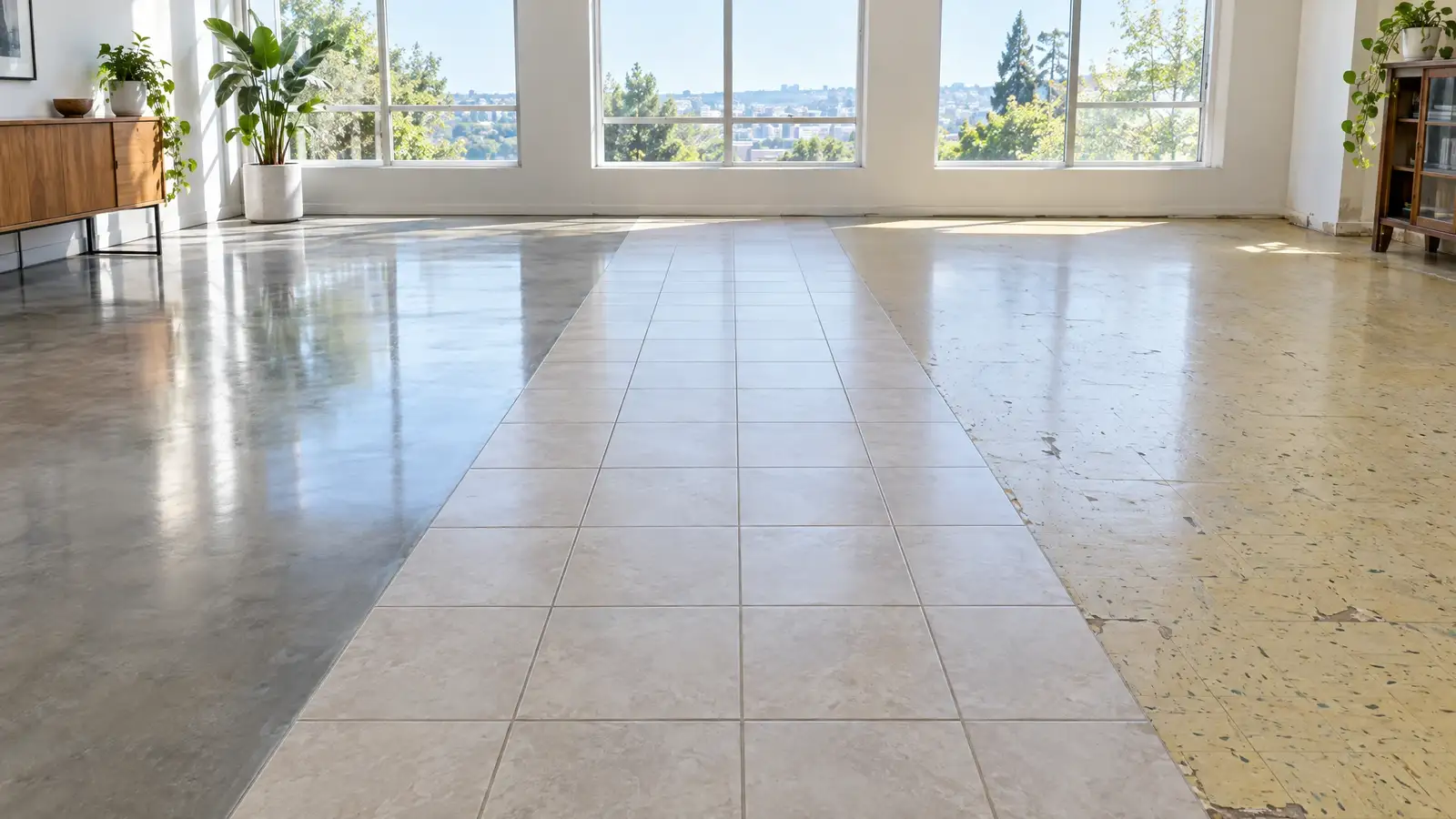
A worn polished floor can be re-polished. Many other floors must be torn out.
Honest limits
Polishing needs a suitable slab and a dry subfloor. It does not have the lowest upfront cost for every project.
Thinking in cycles
Many flooring types are installed, worn out and replaced. A polished slab is closer to a surface you maintain. Routine cleaning keeps it looking good, and periodic refreshes handle the wear in busy lanes.
What changes over time
Traffic lanes dull, small scratches appear and the guard wears down. None of this means the floor has failed. It means the surface is due for a light polish and a new guard.
Questions to ask yourself
How long will you stay in the building? How much traffic will the floor see? Do you want the floor to look the same in ten years or are you comfortable with a lived-in look? These answers guide the finish and the maintenance plan.
Quick answers
Does polishing save money over time?
Often, because maintenance is simple and recoating is not needed.
Is it a good investment for resale?
Many buyers like durable, modern floors, but taste varies.